

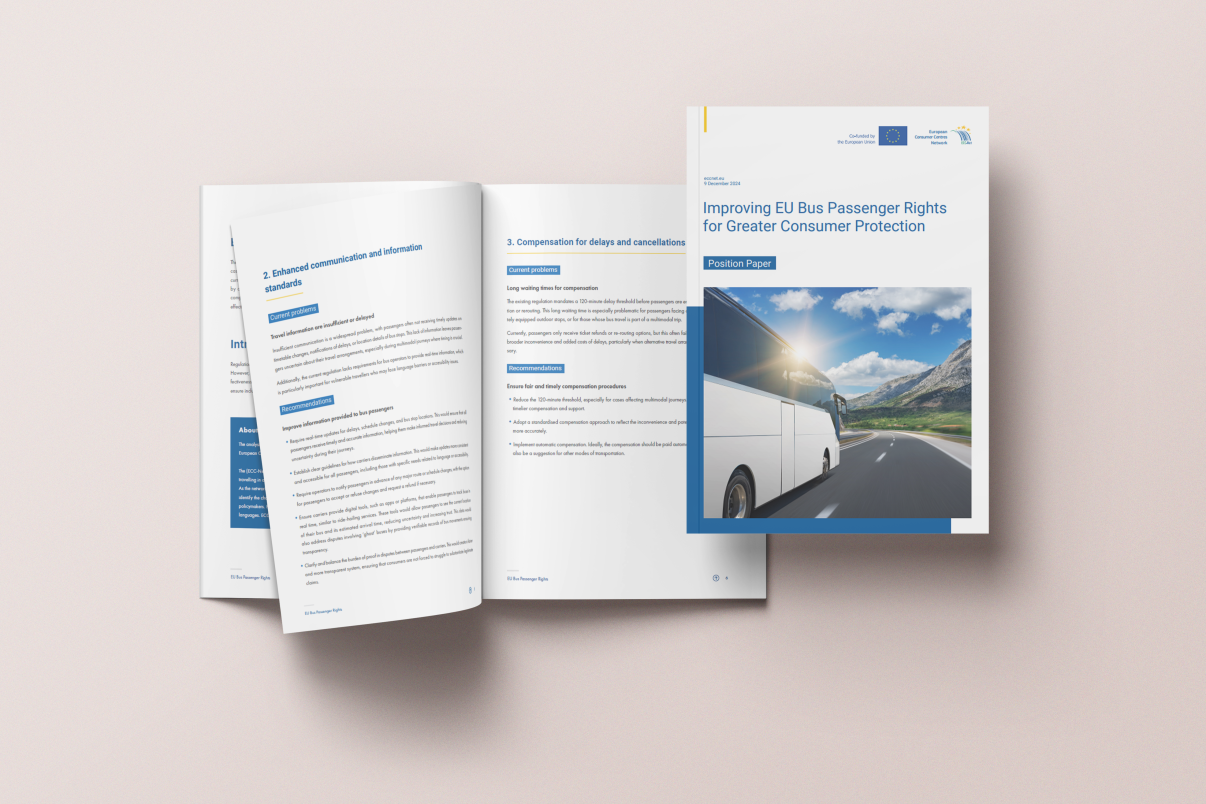
Strengthening EU Bus Passenger Rights: Key Insights from ECC-Net
European consumers often rely on long-distance bus travel for both everyday commutes and international journeys. However, the current EU Regulation on bus passenger rights does not always ensure a consistent or stress-free experience. After reviewing over 4000 consumer cases, the ECC Network (ECC-Net) has identified several recurring issues and potential improvements. ECC-Net’s newly released policy paper addresses the challenges passengers face when travelling by bus and offers practical recommendations to create a more transparent and reliable system for bus travellers.
Problems faced on long-distance bus journeys
Long-distance bus travel is an important transport option for many Europeans, offering affordable and flexible connections. Yet, passengers frequently encounter challenges, such as:
- unclear or late updates on delays and bus stop locations
- lost, stolen or damaged luggage
- limitations to compensation for disruptions
For those relying on buses for long-distance travel, these problems can cause significant inconvenience and added costs. To help enhance their travel experience, ECC-Net’s analysis highlights how the Regulation could be updated to better support passengers’ needs, covering real-time travel updates, better safeguards for luggage, and stronger support during disruptions.
Key recommendations from the policy paper
While the full policy paper offers detailed insights, ECC-Net’s recommendations include addressing frequently reported issues with bus journeys by:
- Ensuring clear, real-time communication about delays and route changes
Providing digital tools, offline solutions, and accessible information in multiple languages could ensure timely and clear communication. - Strengthening luggage handling protections to prevent loss or damage
A check-in system for luggage on longer routes could help keep track of luggage on longer routes. Establishing standardised EU-wide rules covering theft, loss, and damage would acknowledge the inconvenience and ensure fair compensation for additional costs. - Simplifying compensation processes and expanding eligibility for delays and cancellations
Lowering the 120-minute threshold for compensation and re-routing eligibility could reduce the inconvenience caused by disruptions. Automatic compensation could also be considered to streamline the process.
By addressing the identified issues, ECC-Net believes that passengers will benefit from a more reliable, transparent, and fair travel environment. This will help build trust in long-distance bus travel and support the EU’s move towards more sustainable, transparent, and efficient transport solutions.
Want to know more?
As the EU continues to refine its transport policies, ECC-Net’s policy paper serves as a valuable resource, drawing on consumers' experiences and two decades of experience in resolving issues on behalf of consumers across the EU. For more insights, access the policy paper on: Improving EU Bus Passenger Rights for Greater Consumer Protection | European Consumer Centers Network.