

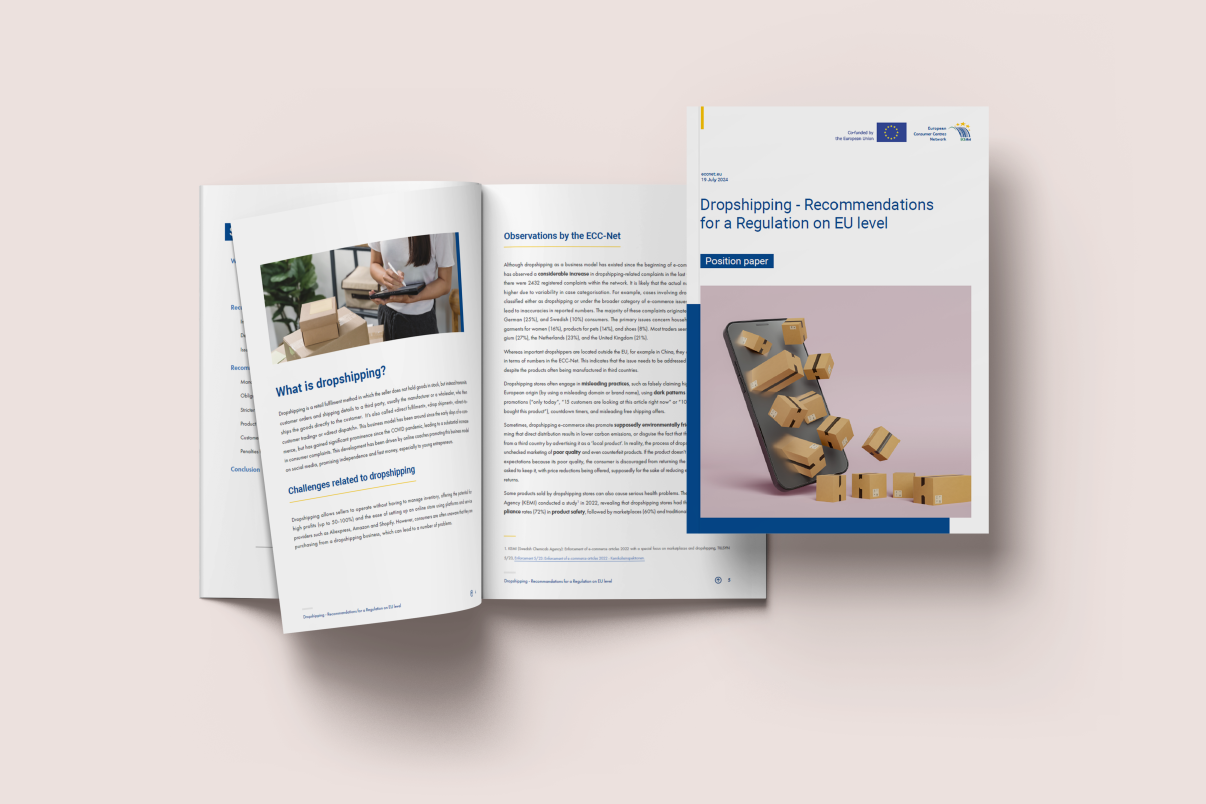
ECC-Net Wants to Improve Consumer Protection in Relation to Dropshipping
The European Union has continuously strengthened consumers’ rights in e-commerce throughout the last decades. Although consumers are well-protected against unfair business practices in many ways, the European Consumer Centres Network (ECC-Net) has observed a series of problems related to the rising number of so-called 'dropshipping' companies. Therefore, ECC-Net has released a policy paper addressing the challenges associated with dropshipping.
What is dropshipping?
Dropshipping is a retail fulfilment method in which the seller does not hold goods in stock. Instead, they transfer customer orders directly to third-party suppliers who handle shipping. This business model has been present since the early days of e-commerce, but we have seen a significant increase in recent years.
The challenges of dropshipping
ECC-Net has observed a surge in dropshipping-related complaints. The main issues are:
- Lack of transparency
Consumers often lack awareness that they are dealing with a dropshipping business. Furthermore, they do not know that their well-known European consumer rights might not align with the business model of dropshipping companies. - Misleading practices
Some dropshipping stores falsely claim high product quality or European origin, leading to disappointed consumers. - Unsafe products
Dropshippers often sell products that enter the EU from third countries where safety standards differ. - Sustainability concerns
Dropshipping adversely affects the environment as thousands of parcels enter the EU, often by air.
Issues that need to be addressed according to ECC-Net
Currently, there are no specific rules for dropshipping companies in most Member States, nor on a European Level. Therefore, to address the challenges that dropshipping entails, ECC-Net proposes the following recommendations:
- Mandatory disclosure
Online stores practicing dropshipping should transparently disclose that orders are dispatched from third countries. This information should include the contact details of the supplier next to the seller, and the address from which the product is dispatched. - Obligatory acceptance of returns
When selling products to European consumers, sellers should always allow returns to a European address, even if they are based outside the EU. The store must clearly provide a return address in its policy, and consumers should not face high costs for returning products to third countries. - Stricter rules for platforms which provide templates for dropshipping websites
It should be mandatory that legally required information, such as a European return address and verified trader contact details, is clearly available on the store page before it can be published. - Product safety compliance and direct liability of marketing influencers
EU e-commerce law should clearly incorporate obligations for influencers, as does, for example, the French law. In addition, it should be made clear that all dropshipping sellers are responsible for ensuring the compliance of their products with Intellectual property law and product safety regulations. - Customer service
Dropshippers must be required to establish and demonstrate a customer service system with corresponding response obligations.
Want to know more?
Additional information is available in our latest position paper: Dropshipping - Recommendations for a Regulation on EU Level | European Consumer Centers Network (eccnet.eu). In this paper, we highlight the current challenges related to e-commerce and offer our perspective on how to protect consumers even more when they shop online.