Buying a Car in another EU Country
11 January 2023
This report includes practical guides on buying a car in another EU Member State and re-registration in the country of residence.
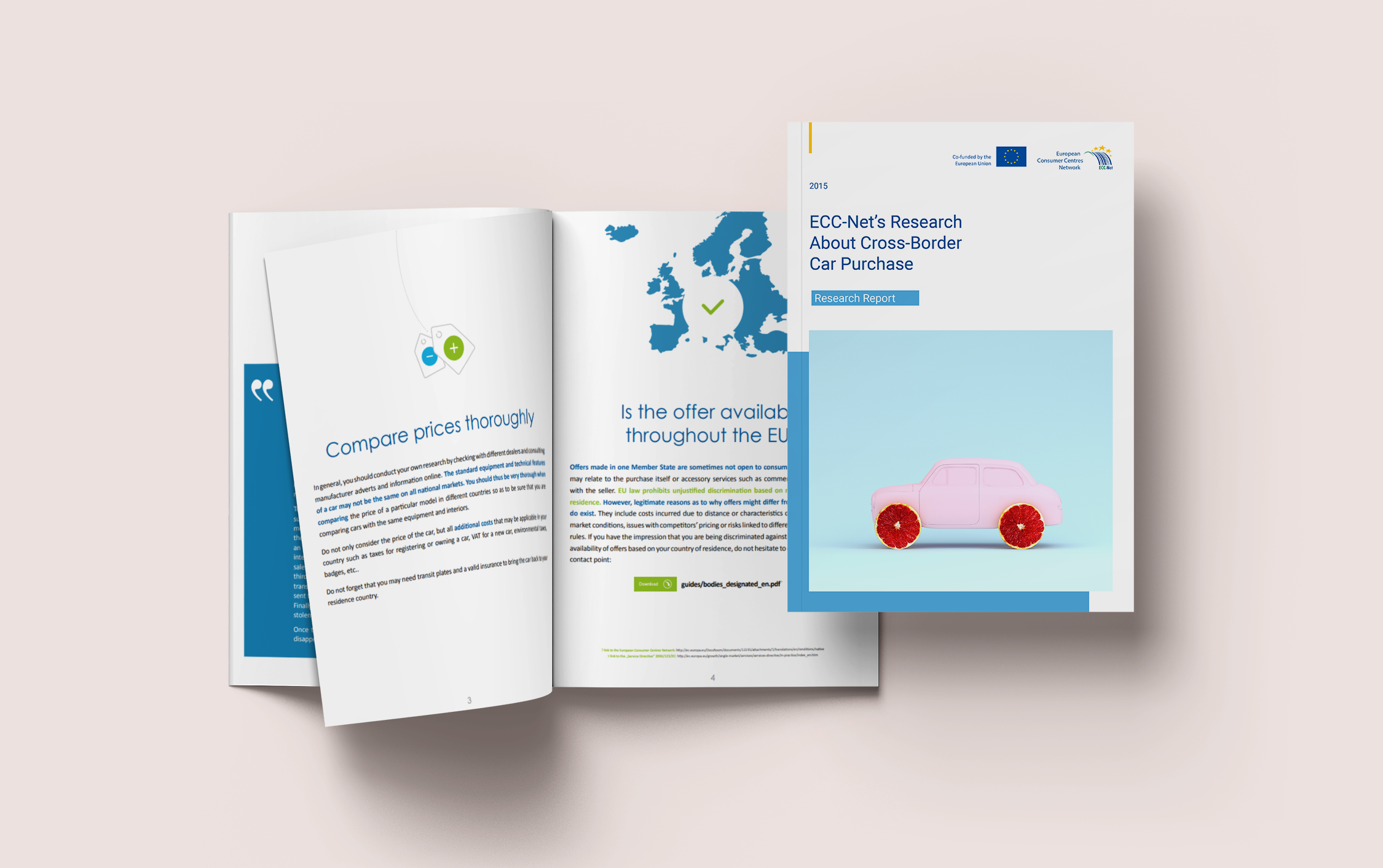
ECC-Net’s tips for consumers: navigating cross-border car purchases
When purchasing a car across EU borders, consumers can benefit from careful planning and vigilance. ECC-Net provides these essential tips to help consumers make informed decisions and avoid common pitfalls:
Conduct thorough research
- Compare prices
Consumers should research and compare car prices across different countries. It's important to consider variations in standard equipment and features, and to factor in all additional costs such as registration fees, taxes, and insurance. - Consider all costs
In addition to the car’s price, consumers should be aware of other expenses like VAT, environmental taxes, and any costs related to transit plates and insurance.
Verify the legitimacy of the seller
- Check seller credentials
Consumers should verify the legitimacy of the seller by consulting public company registers and confirming contact details. Online buyers should ensure the website is trustworthy, with clear terms, conditions, and legal guarantees. - Be wary of red flags
Caution is advised when dealing with new or unverified websites, multiple contact points, or suspiciously low prices.
Ensure comprehensive vehicle documentation
- Request essential documents
Before finalizing a purchase, consumers should obtain and verify all necessary documents, including the vehicle’s serial number, proof of ownership, service history, and registration papers. - Authenticate documentation
It is crucial to ensure that all documents are authentic to avoid complications with vehicle registration and ownership.
Assess the car’s true value
- Verify market value
Consumers should use established tools and resources to determine the car’s market value. Be cautious of offers that seem too good to be true and verify the vehicle’s history and valuation through multiple sources.
Avoid fraud
- Secure payment methods
Consumers should use secure payment methods and avoid unconventional payment requests or advance deposits. Be aware of common fraud schemes, such as fake vehicle listings and overpayment scams. - Recognize warning signs
Familiarity with common fraud indicators, such as unusually low prices or requests for payments through anonymous channels, can help avoid scams.
Review contracts carefully
- Understand contract terms
It is important for consumers to thoroughly review contract terms before signing. Understanding legal guarantees and cooling-off rights is crucial, especially in distance and off-premises contracts.
Seek legal and dispute resolution support
- Explore dispute resolution options
Consumers facing issues with cross-border purchases should contact the European Consumer Centre for support. Familiarizing themselves with the dispute resolution process can help in enforcing their rights under EU law.
Want to know more?
For more detailed information download the full paper. Additionally, for resources on cross-border car purchases, consumers can refer to the full guidelines available here. This guide offers comprehensive insights to assist consumers in navigating the complexities of international car buying.