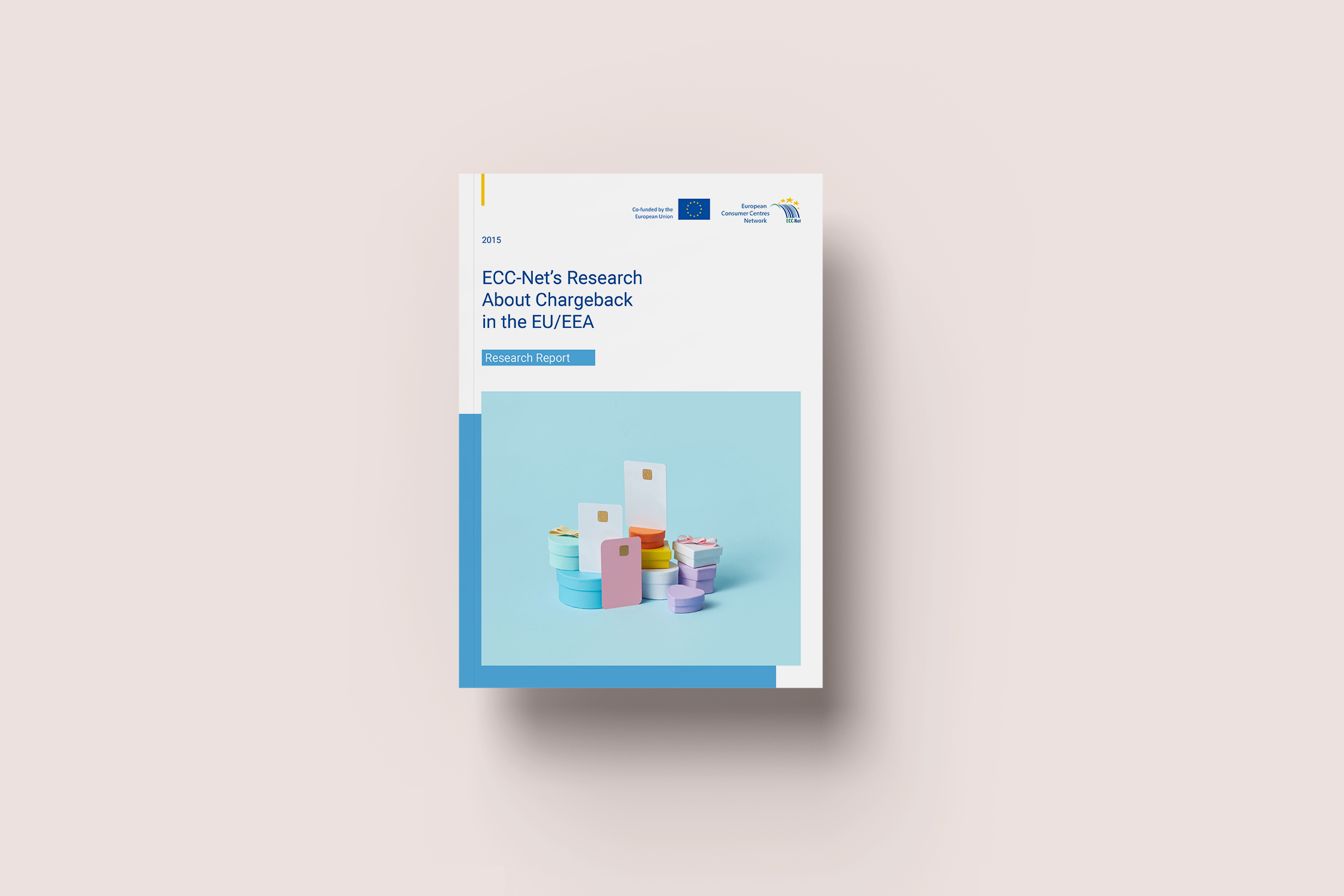
Chargeback in the EU/EEA
This report aims to clarify the legal bases for chargeback procedures that can be used by consumers in the EU, Norway and Iceland and how these are implemented on the ground. It also explores out-of-court dispute resolution procedures and additional possibilities that card issuers give to their clients.
Understanding chargeback rights in Europe: a summary
Recent advancements in European consumer protection have significantly enhanced the reliability of e-commerce across Europe. As outlined in a comprehensive report by the European Consumer Centres Network (ECC-Net), the chargeback system plays a crucial role in safeguarding consumers.
What is chargeback?
Chargeback is a procedure allowing consumers to recover funds from their bank if a transaction is unauthorized or if the merchant fails to deliver goods or services as promised. Initially designed to address fraud, chargeback now also covers situations such as merchant bankruptcy or disputed transactions.
Key findings
- Legal framework
The report emphasizes two main directives—Directive 2007/64/EC on payment services and Directive 2008/48/EC on credit agreements—that underpin chargeback rights in the EU, Norway, and Iceland. These directives ensure that consumers are protected in cases of unauthorized card use or merchant insolvency. - Implementation variability
While chargeback rights are established across member states, the implementation can vary. For instance, some countries extend chargeback rights to transactions made with debit cards, a practice not uniformly adopted across all nations. - Out-of-Court dispute resolution: The report highlights the availability of out-of-court dispute resolution mechanisms in all participating countries, though their effectiveness and accessibility can differ. Notably, some countries mandate participation in these systems, while others leave it optional.
- Challenges and recommendations: Despite robust legal protections, consumers often face challenges in accessing chargeback services due to inadequate information or varying national practices. The report suggests that banks should better inform consumers about chargeback options and that ECCs should continue to advocate for clear, consistent chargeback procedures.
Case studies
- Euroteam
Consumers who purchased Olympic tickets online were able to use chargeback after the seller went bankrupt, illustrating the practical application of chargeback in protecting consumer rights. - Formlife
In this case, ECC Norway's intervention helped consumers recover funds after unauthorized charges were made for products supposedly ordered via Facebook ads.
Want to know more?
While chargeback rights are broadly recognized, the application and ease of accessing these rights can vary. Consumers are advised to be proactive in understanding their chargeback options and to seek assistance from consumer protection agencies when necessary. Download the pdf to read the full paper.