ECCs Ideal Candidates for ADR Contact Points
The European Commission has recently proposed new measures to streamline alternative dispute resolution (ADR) in the digital market. A key element of this proposal is the designation of European Consumer Centres (ECCs) as ADR contact points. This paper contains an joint statement of the ECCs presenting their perspective on the Commission’s proposal and the associated tasks.
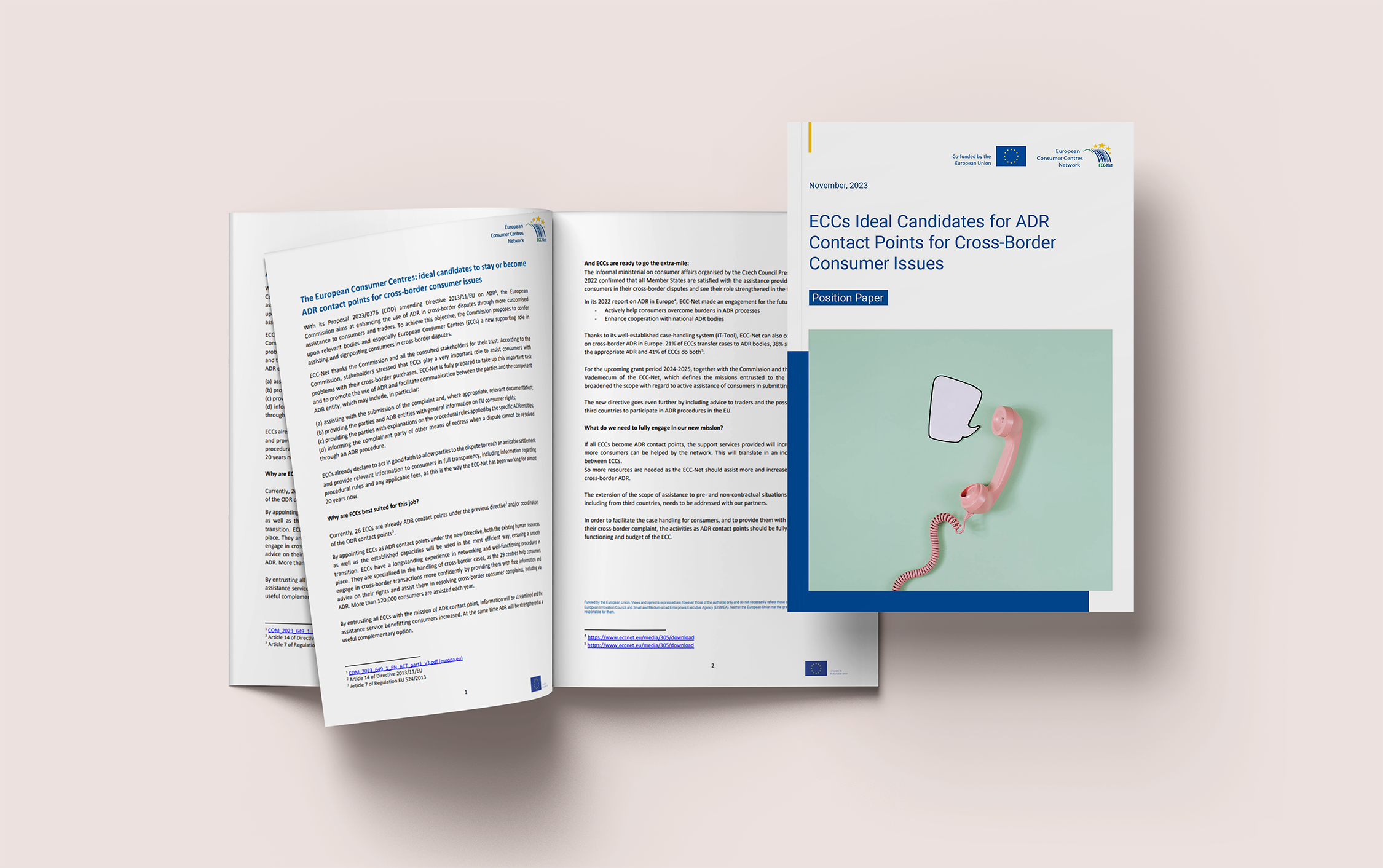
With its Proposal 2023/0376 (COD) amending Directive 2013/11/EU on ADR, the European Commission aims at enhancing the use of ADR in cross-border disputes through more customised assistance to consumers and traders. To achieve this objective, the Commission proposes to confer upon relevant bodies and especially European Consumer Centres (ECCs) a new supporting role in assisting and signposting consumers in cross-border disputes.
ECC-Net thanks the Commission and all the consulted stakeholders for their trust. According to the Commission, stakeholders stressed that ECCs play a very important role to assist consumers with problems with their cross-border purchases. ECC-Net is fully prepared to take up this important task and to promote the use of ADR and facilitate communication between the parties and the competent ADR entity, which may include, in particular:
- Assisting with the submission of the complaint and, where appropriate, relevant documentation.
- Providing the parties and ADR entities with general information on EU consumer rights.
- Providing the parties with explanations on the procedural rules applied by the specific ADR entities.
- Informing the complainant party of other means of redress when a dispute cannot be resolved through an ADR procedure.
ECCs already declare to act in good faith to allow parties to the dispute to reach an amicable settlement and provide relevant information to consumers in full transparency, including information regarding procedural rules and any applicable fees, as this is the way the ECC-Net has been working for almost 20 years now.
Why are ECCs best suited for this job?
Currently, 26 ECCs are already ADR contact points under the current directive and/or coordinators of the ODR contact points.
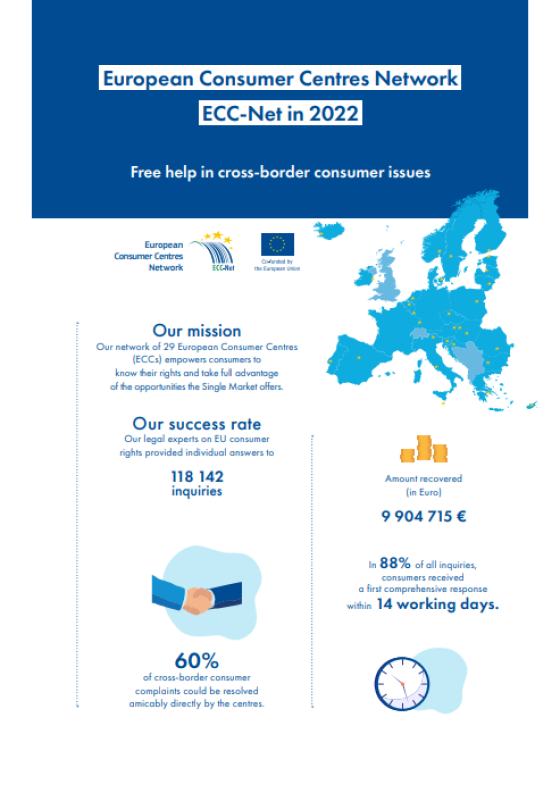
By appointing ECCs as ADR contact points under the new Directive, both the existing human resources as well as the established capacities will be used in the most efficient way, ensuring a smooth transition. ECCs have a longstanding experience in networking and well-functioning procedures in place. They are specialised in the handling of cross-border cases, as the 29 centres help consumers engage in cross-border transactions more confidently by providing them with free information and advice on their rights and assist them in resolving cross-border consumer complaints, including via ADR. More than 120.000 consumers are assisted each year.
By entrusting all ECCs with the mission of ADR contact point, information will be streamlined and the assistance service benefitting consumers increased. At the same time ADR will be strengthened as a useful complementary option.
Are ECCs ready to go the extra-mile?
The informal ministerial meeting on consumer affairs organised by the Czech Council Presidency in September 2022 confirmed that all Member States are satisfied with the assistance provided by the ECC-Net to consumers in their cross-border disputes and see their role strengthened in the future. In its 2022 report on ADR in Europe, ECC-Net made an engagement for the future:
- Actively help consumers overcome burdens in ADR processes
- Enhance cooperation with national ADR bodies
Thanks to its well-established case-handling system (IT-Tool), ECC-Net can also collect interesting data on cross-border ADR in Europe. 21% of ECCs transfer cases to ADR bodies, 38% signpost consumers to the appropriate ADR and 41% of ECCs do both.
For the upcoming grant period 2024-2025, together with the Commission and the Member States the Vademecum of the ECC-Net, which defines the missions entrusted to the centres, has already broadened the scope with regard to active assistance of consumers in submitting cases to ADR.
The new directive goes even further by including advice to traders and the possibility of traders from third countries to participate in ADR procedures in the EU.
What do ECCs need to execute this new role?
If all ECCs become ADR contact points, the support services provided will increase as, (fortunately) more consumers can be helped by the network. This will translate in an increase of interactions between ECCs. So more resources are needed as the ECC-Net should assist more and increase their involvement in cross-border ADR.
The extension of the scope of assistance to pre- and non-contractual situations as well as to traders, including from third countries, needs to be addressed with our partners.
In order to facilitate the case handling for consumers, and to provide them with a one-stop-shop for their cross-border complaint, the activities as ADR contact points should be fully integrated in the functioning and budget of the ECC.