Mileage Verification with Car-Pass: Ensuring Accuracy for Vehicles Abroad

11 April 2024

Car-Pass offers numerous benefits for both buyers and sellers of vehicles abroad. It is an established solution in certain European countries, aiming to combat odometer tampering in the used car market. Implemented in Belgium and the Netherlands, Car-Pass provides a certificate to buyers at the time of sale, verifying the vehicle's mileage accuracy. 

The European problem of odometer manipulation 

Certain used car vendors will not hesitate to manipulate the odometer in order to decrease the mileage shown by using tools freely available for sale online. The result: a significant increase in the vehicle’s value. Problems: 

  • It is not always technically possible to detect odometer manipulation, as maintenance books can be easily falsified. 
  • It is not possible to obtain information on the vehicle from competent organizations without already being the owner or without the vendor’s consent for data protection reasons. 
  • Even when odometer manipulation is detected, frauds often remain unpunished. 

A European Commission study shows that dealers who sell used vehicles often fail to fulfill their information obligation and do not check mileage before the sale. For the consumer, it is therefore extremely difficult to obtain or to verify the mileage displayed on the meter. That is why certain German car experts are proposing a complete and thorough inspection for approximately 70 euros (“Gebrauchtwagenuntersuchung”) on used vehicles to be sold. 

A report published in 2016 by the European Consumer Centres Network (ECC-Net) also revealed that even though odometer manipulation is prohibited in 26 European countries, only 9 of them + UK have proposed a solution to verify a vehicle’s mileage before its purchase. Out of these 10 countries, 8 propose that the buyer consults a national mileage registry of registered vehicles. Belgium and the Netherlands are the only two countries to suggest that a certificate be given to the buyer at the time of sale, specifying the vehicle’s mileage. 

Since 2019, France also initiated a public service allowing car owners to edit a report of the car’s situation. However, this system is not mandatory, not necessary well known and not connected with other systems in the EU such as the Car-Pass Belgium allows with some countries. Also the information available includes only the ones in the Car registration system SIV (Système d’immatriculation des Véhicules), which means that only the mandatory technical control results appear, not every single visit to an automotive professional, as it is the case in Belgium. The European Parliament, in its CARS 2020 resolution (action plan for a strong automobile industry, competitive and lasting in Europe), “calls on the Commission to take measures, in cooperation with the Member States, to ensure a high level of consumer protection, transparency and safety in the second-hand car market, and to work towards a gradual phasing-out of polluting and less safe vehicles; commends the Commission’s recommendation in the roadworthiness testing regulation to require mileage recording at each test; considers that initiatives such as the ‘Car Pass’ scheme in Belgium could be encouraged by a European Standard; notes that re-registration procedures for vehicle transfers must also discourage cross-border mileage fraud;” Preventative measures like the Car-Pass reinforce transaction transparency in Europe and allow consumers to easily verify the actual mileage of the vehicle. 

This was again reaffirmed on 24th January 2024 by Belgium’s Secretary of State for the Budget and Consumer Protection as a priority of the Belgian Presidency of the Council of the EU.

Consumer safety risks and economic damages 

The manipulation of mileage meters is widespread for example in Germany where it affects more than 1 out of every 3 vehicles and causes 6 billion euros worth of damage per year. This practice in Germany is especially harmful to the many foreign consumers who cross the borders to find the car of their dreams. The internet is also full of used vehicle offers at discounted prices. 

Beyond the fraud on the price of the vehicle, the mileage manipulation raises safety concerns for consumers on European roads. Without knowledge of the real condition of the vehicle, the consumer is less attentive to the wear of the brakes, tires, or any other technical or electronic equipment, resulting in a greater risk of a breakdown or accident.

Unequal punishment in Europe 

While the manipulation of mileage meters is illegal in 26 European countries, the penalties vary considerably from one state to another. In France, if you prove that the actual mileage of the vehicle does not correspond to that announced in the sale’s contract; you may claim cancellation of sale for hidden defect. The cancellation may be ordered by the court even if the seller was not aware of this problem. In Germany, such recourse is highly hypothetical; you must prove that the odometer was tampered with AND that the vendor had the intention of deceit. This is all the more difficult because, in practice, vendors include standard clauses such as “displayed mileage = estimated mileage, actual mileage not known” in sales’ contracts.

Criminally, fraudsters are no worried in Germany. Only the successful modification of the meter can be considered as a fraud offense, punishable by a year imprisonment or a fine, compared to 3 years of imprisonment and 300 000 euros under French Law. The best solution is therefore to verify the actual mileage of the vehicle before buying it.

An already existing solution in Europe: Car-Pass 

To fight against tampering with used car odometers, certain European countries implemented a certificate called “Car-Pass” to be given to the buyer at the time of the sale. 

About the Car-Pass

  • A Car-Pass is a document that shows the distance travelled by a vehicle and the date on which it was recorded during a technical inspection, repair, etc. It certifies the vehicle’s mileage accuracy to the buyer who can verify, at the time of sale, if the mileage shown corresponds to reality. In Belgium, the Car-Pass was created by a 2004 law seeking to combat dishonest practices. In the Netherlands, where a similar system exists, the Nationale AutoPas (NAP) records the vehicle’s mileage at each technical inspection.

    #what-is-car-pass

    Copied to clipboard!
    • Belgium 
    • Netherlands

    At the end of 2016, the government of Lower Saxony region of Germany proposed to the federal government the introduction of a Car-Pass throughout Germany to combat the electronic tampering with used-vehicle odometers. Until today such a system has not been introduced in Germany, despite several attempts to raise awerness on the issue.

    #which-countries-have-a-car-pass

    Copied to clipboard!
  • In Belgium, it is the vendor (private or professional) who gives the Car-Pass to the buyer when selling a used vehicle. It must be less than two months old. In the Netherlands, the buyer may also verify the mileage of the vehicle on the site of the transport authority (RDW) or ask the vendor.

    #who-issues-the-car-pass

    Copied to clipboard!
  • In Belgium, the Car-Pass is one of the obligatory documents given to the buyer at the time of the vehicle purchase. A buyer who does not receive the Car-Pass may request the cancellation of the sale contract. More information on the Car-Pass in Belgium on the site https://economie. fgov.be/fr/themes/protection-des-consommateurs/arnaques-la-consommation/formes-darnaques/vous-avez-achete-une-voiture/car-pass-informations-sur-les

    #consequences-of-failing-to-present-a-car-pass

    Copied to clipboard!
  • In Belgium, the mileage data for all vehicles are collected by a single organization: ASBL CarPass. The mileage is provided by all automobile professionals: garages, manufacturers, tire centers, technical control centres. The Registrations Committee of the Mobility and Transport Ministry also communicates all vehicle registrations in Belgium. By combining all of this data, it is possible to establish the “mileage past” of a vehicle. In the Netherlands since January 2014, it is the Dutch transport authority, Rijksdienst voor Wegverkeer (RDW), which organizes mileage data for NAP.

    #where-does-car-pass-data-come-from

    Copied to clipboard!
  • The implementation of such a certificate would have the immediate effect of increasing consumer confidence in the automobile market, thus increasing used-car sales. The “Car-Pass” would also have the effect of decreasing odometer manipulation on used cars, and will therefore combat fraud. This is actually what happens for imported cars in Belgium from the Netherlands, on which “fraud on vehicles imported from the Netherlands has fallen by 90% in just a few years» according to the Managing Director of Car-Pass asbl. 

    As the 2016 European study “cross-border car purchase-what to look out for when bargain hunting?” from the ECC-Net has shown, many Europeans purchase their vehicle in a country other than their own. An ordinary transaction can quickly turn into an uphill battle: is the seller reliable? Does the vehicle really exist? Is it in good condition? What documents must be given from the seller to the buyer? 

    By enforcing this practice on a European level, Europeans’ doubts about sellers and vehicles located in a country besides their own would be eliminated. Confident in the European automobile market, they would no longer hesitate to cross the border to buy a used vehicle in another European member state. 

    Mileage recorded in electronic chips built into the vehicle is seen by some as an alternative solution to the Car-Pass, but raises the problem of the personal data protection. The vehicle’s information would be collected and managed by car manufacturers and not by an independent public authority, as with Car-Pass. This data could be transmitted to third parties for commercial purposes when the vehicle reaches a certain mileage. 

    As the research study from the ECC-Net has shown, cultural and linguistic barriers, differences in legislation between EU countries and opportunities to assert their rights are all factors that influence consumers in their decisions to buy vehicles abroad.

    #why-develop-a-european-car-pass

    Copied to clipboard!

Benefits of implementing a unified Car-Pass across the EU

  • Provide equal protection to consumers purchasing used vehicles in any EU Member State
  • Strengthen trust in the internal market and the broader European market
  • Showcase tangible measures and the advantages of a Europe responsive to its citizens
ADR in the Nordic and Baltic Countries

23 May 2023

Alternative Dispute Resolution schemes in the Nordic and Baltic countries have a lot in common and build on the same principles and ideas. However, it is also clear there are differences in procedures and working methods. This comparative study aims to gain insight in the similarities and differences between ADR landscapes in Denmark, Estonia, Finland, Iceland, Latvia, Lithuania, Norway and Sweden.

Introduction

The Nordic and Baltic countries have a lot in common in alternative dispute resolution (ADR). Not only does the same EU regulation, the ADR directive, apply to all countries' ADR schemes but the countries also build on the same ideas and thinking on how to organize and deliver out-of-court dispute resolution. 

However, looking closer it is clear that there are also differences when comparing ADR in the Nordic and Baltic countries. The number of notified ADRs differs and there are different procedures and working methods. Furthermore, all countries have their own different limitations preventing them from offering consumers a full ADR coverage in reality. 

We have done this comparative study of ADR in the Nordic and Baltic countries to gain more insight into the similarities and the differences in the ADR landscapes in our countries. The reasoning behind doing this comparative study is three folded:

  1. We want to provide our Network, the ECC-Net, with better understanding on how ADR works in the Nordic and Baltic countries, thereby qualifying the work we do in the Network with assisting consumers in cross-border disputes.
  2. The study is also done to provide information to the European Commission, Nordic and Baltic ministries and other stakeholders. Information that can be used as insight and inspiration during the expected revision of the European ADR and ODR legislation.
  3. Finally, it is also the aim of the study to provide national ADR competent authorities and others with knowledge and data about the ADR schemes in this region. This way we would like to help create a better basis for each of our countries evaluation of national ADR schemes – “Learn from your neighbours” is often the best and easiest way to find inspiration for improvements.

Observations

It is not as such the scope of this study to deliver recommendations, but the discussions between our centers during an ADR workshop hosted by ECC Latvia in December 2022 with the purpose of getting in depth understanding of each countries ADR schemes nevertheless revealed a few important observations. 

In general, trader engagement in ADR and trader compliance with decisions are very strong in the Nordic and Baltic region. There are several reasons for this: 

Some countries specifically mention that ADR bodies are well-reputed by traders and therefore even the non-binding decisions from an ADR are often accepted. Other ADR entities ensure trader engagement and compliance due to their binding decisions or the also well-used type of decision where the trader is bound by the decision if no reaction from the trader. Such decisions ensure that traders that are not actively disputing a decision are bound by such decision. As such, this type of decision does not prevent the traders from taking a dispute to court, but at the same time it safeguards the value of an ADR decisions from the consumers perspective in the situations where a trader simply ignores the ADR procedure. 

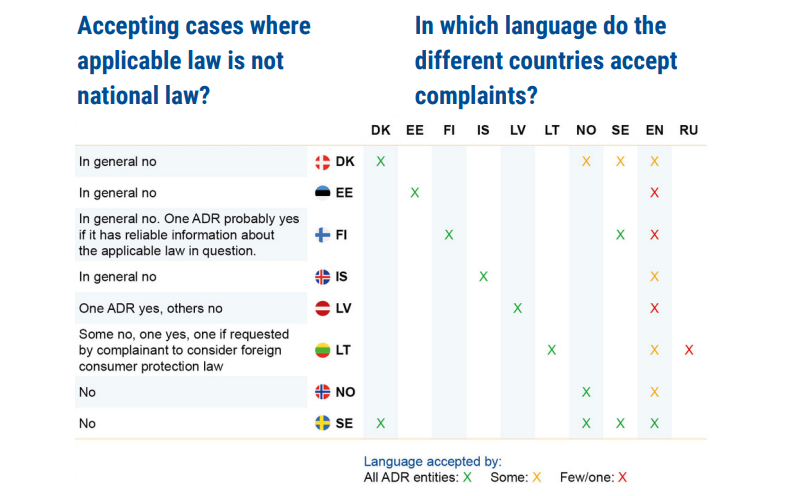
Very often consumers from other countries have difficulties using the national ADR entities. This is the situation in all countries. Language barriers, difficulties in understanding procedures and ADRs' non-acceptance of cases where applicable law are not national law is some of the most often mentioned reasons why consumers from other EU countries have difficulties taking advantages of the ADR schemes. 

The ECC's in all Nordic and Baltic countries work in different ways to support the national ADR schemes. From supporting ADRs via active participation in decision-making and interpretation of EU law and practice to concrete assistance to consumers from other EU countries in order for them to navigate through the complaint procedure at the different ADRs. The services provided by ECCs varies from country to country and it seems relevant to consider if such services towards ADRs and consumers can be aligned and better supported to strengthen ADR in cross-border disputes. 

ECC Denmark, ECC Estonia, ECC Finland, ECC Iceland, ECC Latvia, ECC Lithuania, ECC Norway, ECC Sweden

Survey 

The comparative study is based on data gathered by our centers in October and November 2022. The data was further qualified in discussions that were carried out at the joint workshop in Riga. 

With this report, we provide a unique and easily accessible comparative study of ADR schemes in the Nordic and Baltic region. The data is not meant to be an exhaustive presentation of countries included in this study; neither does it resemble the official ADR reports produced by the national competent authorities. 

Instead, this study is looking into some of the most important characteristics of the ADR schemes from the practitioners’ perspective, for example the different limitations that can hinder consumers from turning to the ADRs. The focus in this study is also on ADR complaint handling barriers linked to cross-border disputes, as the ECC-Net's main task is to assist consumers that are involved in a cross-border dispute with a trader. 

Each dataset is accompanied by a few comments and, where relevant, we have also provided some insights that cover in-depth information on some of the interesting findings, and/or some good examples identified in one of the participating countries.

Country-specific information on ADR

    • Iceland
      Number of notified ADRs: 6 
      Funding: public and private
    • Norway
      Number of notified ADRs: 12
      Funding: public and private
    • Sweden
      Number of notified ADRs: 7
      Funding: public and private
    • Finland
      Number of notified ADRs: 3
      Funding: public and private
    • Denmark
      Number of notified ADRs: 26
      Funding: public and private
    • Estonia
      Number of notified ADRs: 4
      Funding: public and private
    • Latvia
      Number of notified ADRs: 6
      Funding: public and private
    • Lithuania
      Number of notified ADRs: 4
      Funding: public

    The number of ADR entities varies and the Danish ADR scheme has considerably more ADRs than the other countries. In addition, the number of complaints varies considerably from country to country, from 553 cases in Latvia to 24,763 cases in Norway. In all countries ADR entities are both publicly and privately funded, except Lithuania. ADR entities in Lithuania are fully financed by public means. General (residual) ADR entities are established in all countries and all residual ADR entities are public ADRs.

    #overview–nordic-and-baltic-adr

    Copied to clipboard!
    • Denmark: 14,090 
    • Estonia: 3,087 
    • Finland: 6,972 
    • Iceland: 994 
    • Latvia: 553 
    • Lithuania: 9,220 
    • Norway: 24,763 
    • Sweden: 21,630

    #total-number-of-complaints

    Copied to clipboard!
  • Biggest ADRs based on number of complaints (2021):

    • Allmänna reklamationsnämnden (ARN) / The National Board for Consumer Disputes (Sweden): 19,699
    • Valstybinė vartotojų teisių apsaugos tarnyba / State Consumer Rights Protection Authority (Lithuania): 8,557
    • Forbrukertilsynet / The Consumer Authority (Norway): 8,072 

    #insights

    Copied to clipboard!

ADR accessibility 

English is the most broadly accepted foreign language and can be used in many ADR entities in the Nordic and Baltic countries. But in all countries there are ADR entities that require complaints to be filed only in official national language(s). 

Almost all ADR entities only accept cases where the applicable law is the national law. In all countries it will often not be possible to file a complaint at an ADR entity if the trader is not established in the same country as the ADR. 

Trader engagement is mainly voluntarily but most ADRs in the Nordic and Baltic countries can make decisions regardless of whether the trader participates or not. This way the procedural rules give traders a strong incitement to participate in ADR. 

Although all sectors seem to be covered in most countries there are in reality some circumstances that limit the coverage in reality: Full ADR coverage in reality is reduced by monetary thresholds in most countries, as well as due to cases being rejected if the trader is not established in the country of the ADR, or because the applicable law is not the national law.

Image
ADR accessibility

Country-specific information on ADR accessibility

    • ECC Denmark 
      In general no, but many ADRs have an exception: If the case has a greater attachment to Denmark than the country of establishment, or if the parties have agreed upon this. One ADR (the NEB) accepts cases against airlines established in other countries. 
    • ECC Estonia
      Two insurance sector ADRs accept cases against insurers located in another EU country if they have received consent from the insurer that the matter can be resolved in the conciliation body. General ADR (Consumer Disputes Committee) accepts complaints against a trader from another EU country if the trader states in their terms and conditions that the competent out-of-court body is Consumer Disputes Committee. 
    • ECC Finland
      Two ADR entities accept, but they require the trader to send its response in Finnish or Swedish. However, if the consumer's complaint is based on the EU Regulation 261/2004 (air passenger rights), the trader is allowed to respond in English.  
    • ECC Iceland
      In general, they do not and many of them would dismiss such cases. However, some ADR´s have not totally dismissed that possibility as they have not received cases from traders established in another country to this point. 
    • ECC Latvia
      No, except from one ADR (insurance) that handles complaints of clients of members of the Latvian Insurers Association, as well ombudsman handles complaints about an insurer who is not a member of the Association of Latvian Insurers, but which has the right to provide insurance services in the Republic of Latvia, if the particular insurer agrees in writing to the procedure for handling the complaint. 
    • ECC Lithuania 
      One ADR accepts cases against traders established in another EU country, the others don´t. ECC Lithuania 
    • ECC Norway
      Most ADRs don´t, but some do if the trader is a member of branch organisation or is registered in guarentee fund, or directs their services to, or operates in Norway. 
    • ECC Sweden
      Yes, one ADR if Swedish law applies or foreign law has direct effect in Sweden. Other ADRs accept if the trader is a member of the Swedish branch organisation.

    #cases-against-foreign-traders

    Copied to clipboard!
    • Denmark
      Voluntary participation. However, if the trader does not participate, then the decision will be based on the information given by the consumer. 
    • Estonia
      Voluntary participation. However, if the trader does not participate, then the decision will be based on the information given by the consumer. (Consumer Disputes Committee). 
    • Finland
      Voluntary participation, but there is one exception: in some insurance cases in relation to traffic accidents, the trader is obligated to request a recommended decision from the ADR entity. Secondly, if the trader does not want to participate in the process and the consumer’s claim is reasonable, there will be a unilateral decision and the claim will be accepted. The second prerequisite for issuing a unilateral decision is that there is verifiable proof that the documents were served to the trader. 
    • Iceland
      Voluntary participation. However, if the trader does not participate, then the decision will be based on the information given by the consumer. 
    • Latvia
      Voluntarily participation. However, if the trader does not participate, then the decision will be based on the information given by the consumer. 
    • Lithuania
      Obligatory and voluntarily participation. However, if the trader does not participate, then the decision will be based on the information given by the consumer. 
    • Norway
      Obligatory and voluntarily participation. In some ADR’s the trader is obligated to participate through their industry organisation. Voluntary participation in mediation in one ADR, but if trader does not cooperate, the case can go to The Consumer Disputes Commission. They can make a binding decision. The Consumer Disputes Commission is not a part of the Norwegian ADR system, but it is a public complaint board. 
    • Sweden
      Trader participation is voluntary, but a decision can be made even if the trader does not participate. The trader may also be obligated to participate through their industry organisation, but otherwise no obligation. The board will make a decision regardless of if the trader participates or not.

    #trader-engagement

    Copied to clipboard!
    • Denmark
      All sectors covered, but there are monetary thresholds in most ADR entities. 
    • Estonia
      The general ADR, Consumer Disputes Committee should provide consumers a full coverage. Monetary threshold in one ADR entity. 
    • Finland
      Some investment-related issues are excluded: for example, there is no ADR entity that would be competent to handle disputes concerning cryptocurrencies. Secondly, if the consumer has a dispute with a foreign gambling game company, there is no competent ADR entity. This is because a state-owned company has a state monopoly on gambling in Finland and foreign gaming companies are not allowed to operate here. Thirdly, in order for the Finnish Financial Ombudsman Bureau to examine a case, this requires that the service provider is a member of the Finance Finland Association or that the service provider has a specific agreement with the Bureau on the use of its services. There are no monetary thresholds for filing a complaint. 
    • Iceland
      All sectors covered as “The Complaints board for goods and services” is supposed to handle all consumer disputes that does not fall under other notified ADR´s. No monetary thresholds. 
    • Latvia
      Complaints that cannot be handled by sectoral ADRs, is covered by the general ADR- Consumer Rights Protection Centre’s Consumer Dispute Resolution Commission. In some sectors consideration of case depends on the availability of Commission member from the trader's side. There are monetary thresholds for filing a complaint. 
    • Lithuania
      Full coverage (what is not covered by sectoral ADR bodies, is covered by the State Consumer Rights Protection Authority). Monetary thresholds for filing the complaint in most ADR entities.
    • Norway
      Some ADR’s have monetary thresholds. However, the cases that cannot be covered here, will be covered by the residual ADR. 
    • Sweden
      All sectors covered. Monetary thresholds in most ADR entities

    Insights

    If ECC Latvia is not able to amicably solve a cross-border dispute between a foreign consumer and a Latvian trader, then ECC Latvia transfers the case, if possible to Latvian general residual ADR, the Consumer Rights Protection Centre’s Consumer Dispute Resolution Commission for a decision in the dispute. In cases where the applicable law is that of the consumer country, ECC Latvia ensures ADR with information about the applicable foreign consumer country law. This information is obtained in cooperation with the ECC in the consumer's country. The ADR entity accepts to issue decisions based on the information on the applicable law received from the ECCs. 

    In Lithuania, the main ADR entity (State Consumer Rights Protection Authority) may issue a fine for the trader in case the trader does not provide the information requested by the ADR body during the procedure. 

    In Finland, Iceland and Norway the consumers can get access to ADR regardless of the disputed amount. In all other countries, some ADR entities have monetary threshold and the amount varies from 10 EUR to more than 1300 EUR.

    #covered-sectors-and-complaints

    Copied to clipboard!

ADR schemes and procedures

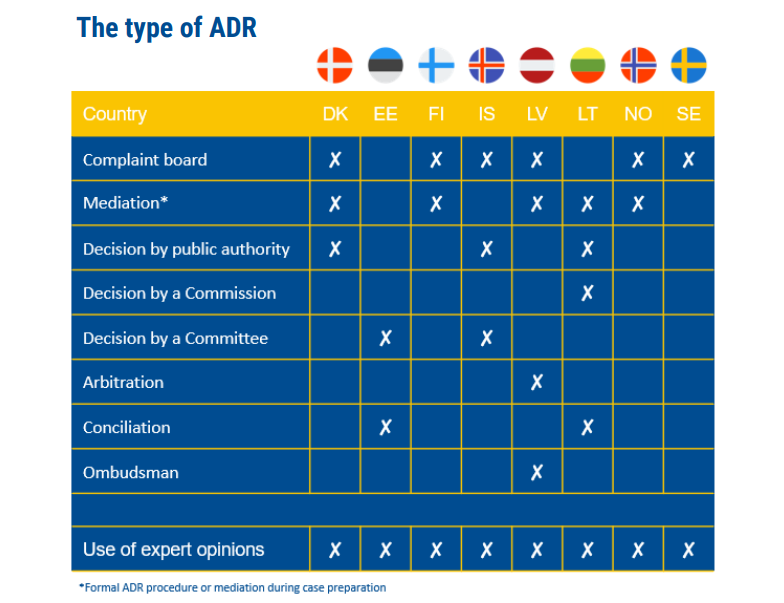
The Nordic and Baltic ADR schemes cover a wide range of different ADR models: Complaint Boards, Mediation, Conciliation, Commission, Decisions by public authorities, arbitration and Ombudsman. 

The average case handling time varies not only from country to country but also from one ADR entity to another. From 58 days as the shortest average case-handling time and 16 months as the highest. 

All countries have ADR entities that use expert opinions as part of the decision making.

Image
Image of different types of ADRs

Country-specific information on ADR schemes and procedures

  • Denmark

    • Mediation procedure
      The public residual ADR provides a mediation service. A legal case handler mediates via a conference call with the consumer and the trader. If the mediation is unsuccessful, the consumer can decide to escalate the complaint to a complaint board. 
    • Complaint board
      Most ADR entities make use of decisions issued by a complaint board. The complaint boards consist of one judge, two representatives appointed by consumer organisations and two representatives appointed by trader organisations. Decisions are based on a legal assessment of the case. Majority rulings. 
    • Decision by Public Authority
      Decisions issued by the Public Authority based on a legal assessment of the complaint. 

    Estonia

    • Consumer Disputes Committee
      Complaints assessed and decision made by the head of the committee together with one representative from business side (mostly trader organisations) and one representative from consumer side. The decision is not binding. 
    • Conciliation I
      Insurance ADR entities make use of concilitation. The conciliator tries to bring the parties to an agreement. If conciliation is unsuccessful, a decision is issued and, if relevant, the consumer can turn to court. 
    • Conciliation II
      At the Bar Association, the Court of Honor can make use of experts and witnesses when needed. The conciliator proposes a decision and the parties can agree or disagree. 

    Finland

    • Complaint board
      All three ADR entities make use of the complaint board model. For example, the Consumer Disputes Board comprises of various sections, each of which has four members plus an independent chairman who is typically a district court judge by profession. The members of the sections represent consumer interests as well as the business sector. Legal and other expertise is taken into account in selecting the members. 
    • Mediation procedure
      There may be an informal mediation phase before the case proceeds to the dispute process. The ADR entities use this option more or less. 

    Iceland

    • Most ADRs make use of decisions issued by a committee. The committees consist of a chairman appointed by the ministry and equal number of representatives appointed by consumer organisations and by trader organisations. Decisions are based on legal assessment of the case. Majority rulings. 

    Latvia

    • Complaint board
      The residual ADR acts as complaint board. It consists of a chairman (former judge) and representatives from consumer and trader organisations (one from each side). Decisions are based on a legal assessment of the case. Majority rulings. 
    • Ombudsman decision
      The ombudsman issues decisions based on a legal assessments of the cases. 
    • Mediation procedure - decisions
      The Latvian Motor Insurers Bureau ADR provides an opinion based on the outcome of a mediation procedure. 

    Lithuania

    • Combined procedures
      Most ADR entities have mixed procedures, eg.the main ADR has a mix of mediation and consilation. The ADR body starts the procedure with offering the dispute parties to make an amicable decision. If the agreement is not reached, the ADR body evaluates all the evidence, explanations of parties of the dispute and makes a decision based on legal acts and practice.
    • Authorised person
      The Communications Regulatory Authority has a decision of an authorized person. When a claim is received, a responsible investigating officer is appointed, the final decision is made by an authorized person (decision of a member of the Authority Council). 

    Norway

    • Mediation procedure
      The public residual ADR provides a mediation service. A legal case handler mediates via a conference call with the consumer and the trader. If the mediation is unsuccessful the consumer can decide to escalate the complaint to a complaint board. This complaint board is not at part of the Norwegian ADR system, but it is a public complaint board. 
    • Complaint board
      Most ADR entities make use of decisions issued by a complaint board. The complaint boards consist of one judge, one representative appointed by consumer organisations and one representative appointed by trader organisations. Decisions are based on a legal assessment of the case. Majority decision. 

    Sweden 

    • Complaint boards
      All ADR entities make use of decisions issued by a complaint board. Most complaint boards consist of one judge, two representatives appointed by consumer organizations and two representatives appointed by trader organizations. Decisions are based on an impartial legal assessment of the case. Majority decision.

    #types-of-adr-schemes

    Copied to clipboard!
  • Some national ADR entities have a shorter average case-handling time than others. The numbers presented here are the minimum and maximum averages, depending on the ADR entities.

    • Denmark: 67 - 220 days 
    • Estonia: 58 - 90 days 
    • Finland: 180 - 480 days 
    • Iceland: 30 - 210 days 
    • Latvia: 90 days 
    • Lithuania: 36 - 68 days 
    • Norway: 45 - 120 days 
    • Sweden: 90 - 360 days 

    Insights

    The main ADR in Lithuania (State Consumer Rights Protection Authority) is a good example of how a combination of mediation and consiliation procedure can be combined with binding decisions (if the dispute parties do not reach an amicable agreement in the beginning). If not disputed in court in 30 days the ADR decision becomes an enforceable document. Consumers can save time and money as they don’t have to go to court like in other cases where decisions are not binding and traders don’t follow them. 

    #average-case-handling-time

    Copied to clipboard!
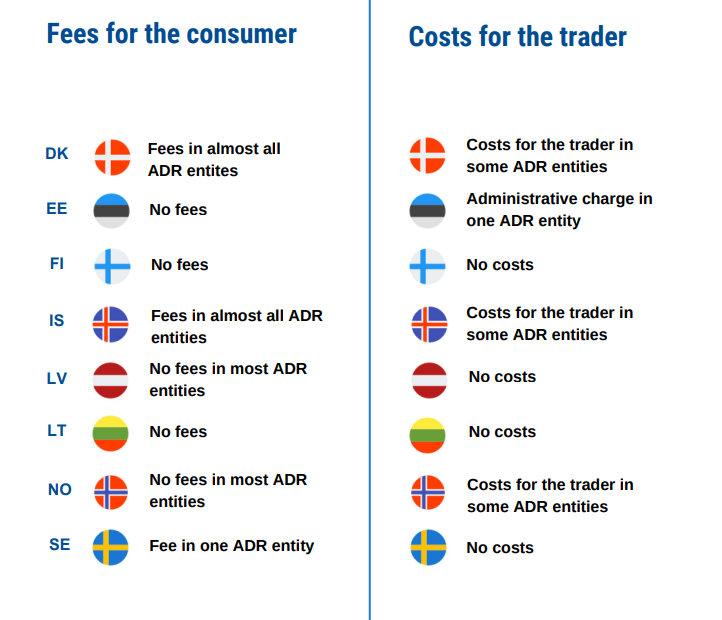
  • Fees for consumers and costs for traders vary considerably from country to country as well as between national entities. In two countries, Finland and Lithuania, the ADR schemes are completely free of costs and fees for the consumers and traders.

    Image
    Overview of ADR fees and costs

    Insights

    In Denmark an often used cost model differentiate the costs a trader has to pay to the ADR. The trader pays a reduced cost if the case is settled during the process at the ADR entity (sometimes depending on which phase the case has reached) and full cost if the decision is made in favor of the consumer. Usually, the trader pays no cost if the case is won. This way there is a build-in incitement for traders to avoid complaints to the ADR entity or to consider an early settlement of the case if the outcome is uncertain. 

    In Iceland consumer fees are kept as low as possible to ensure that access to ADR is not made difficult due to financial threshold. If the consumer wins a case (partially or in full) he or she generally gets the fee refunded. Usually, the trader pays no cost if the case is won. 

    In Estonia the draft law on amending the Consumer Protection Act is being reviewed. The main goal of the planned changes is to ensure simple, quick, cheap, impartial and fair resolution between traders and consumers. Among other planned amendments, changes in the cost model has been under discussion, but the process is still in its early stages. 

    In Norway the public residual ADR is financed by the government. Neither consumers nor traders have to pay a fee. In some other ADR entities the trader has to pay a small or bigger amount, sometimes depending on the outcome of the case. 

    In Lithuania, most ADR procedures are free of charge for consumers and traders. However, in cases where the main ADR body undertakes the inspection of a particular good or service, the costs for this inspection are covered by the trader if the consumer's request is satisfied

    #fees-and-costs

    Copied to clipboard!
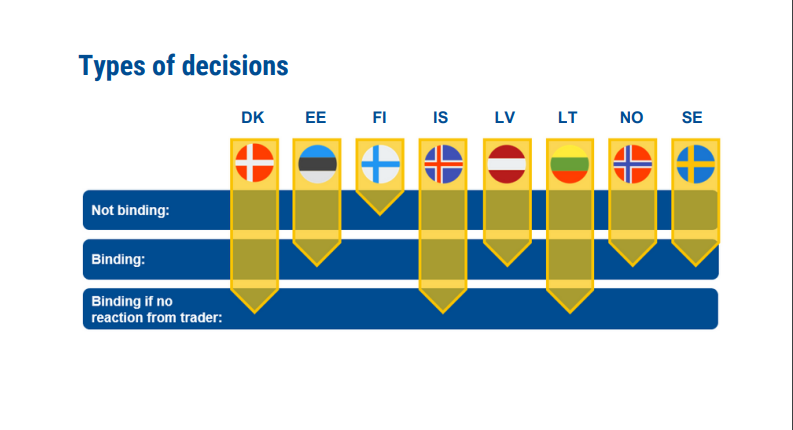
  • All countries have ADR entities that operate with non-binding decisions and all countries except Finland have ADR entities issuing binding decisions. 

    ADR entities in three countries – Denmark, Iceland and Lithuania – issue decisions that become binding if the traders do not challenge the decisions. 

    With a few excemptions, the compliance rates are very high in the Baltic and Nordic countries – between 70 to 100 %.

    ADR decisions compliance rates 

    • Denmark: 84-100%
    • Estonia: 64-100% 
    • Finland: 70-100% 
    • Iceland: 83-100% 
    • Latvia: 40-71% 
    • Lithuania: 33-100% 
    • Norway: Not available 
    • Sweden: 78%
    Image
    Image with the different type of descisions per country


    What is a binding decision in cases where the trader does not react? 

    If the trader does not react, the decision becomes automatically enforceable upon the expiry of the deadline. Denmark, Iceland and Lithuania make use of this type of decisions. 

    This means that consumers get enforceable ADR decisions in the cases where the trader does not participate in the ADR procedure or ignore a decision. 

    In Denmark and Iceland, a trader that wants to avoid being bound by an ADR decision has to notify the ADR within 30 days after receipt of the decision that the decision will not be honored. In Lithuania, a trader that wants to avoid being bound by an ADR decision has to turn to court within 30 days after the adaption of the decision. 

    These types of decisions put pressure on the trader to react to an ADR decision in favor of the consumer and it strengthens the validity of the ADR entities. At the same time these types of decisions do not prevent the traders from going to court in a situation where the trader find it reasonable to challenge the ADR decision. 

    High compliance rate with non-binding decisions in Finland

    The Finnish ADR scheme has a long tradition helping consumers – the ADR entities (or their predecessors) were established decades ago. Transparent decision-making practices, strong expertise and the trust built over the years may explain why the majority of traders are willing to comply with non-binding ADR decisions. 

    Secondly, publicity matters. Traders that do not comply with ADR decisions are usually named. The Finnish media is usually interested in publishing articles about well-known traders that refuse to act according to the decision. This may have a deterrent effect.

    #decisions

    Copied to clipboard!
  • Norway is the only country without any publicly available information about traders that do not comply with ADR decisions. 

    In all other countries there are different types of "naming and shaming" publications. No country has a complete list of traders that do not comply with decisions from all ADR entities.

    Public information about traders that do not comply with ADR decisions (“naming and shaming”)

    • Denmark
      Yes - some ADR entities publish names of traders not complying with decisions if they do not go to court to challenge the decision. 
    • Estonia
      Yes - Consumer Protection and Technical Regulatory Authority holds a "black list" of traders who do not comply with the Consumer Disputes Committee's decision. Unfortunately, even having only four notified ADR bodies, they do not cooperate regarding a mutual black list in Estonia. Therefore, we do not have a comprehensive black list of traders that would cover all ADR bodies. 
    • Finland
      The Consumer Disputes Board does not have a separate list of traders that do not comply with decisions given by the Board. However, all documents related to a complaint, including information on whether a given decision was complied with, are archived and available to the general public upon request. In addition, there is a black list that is maintained by the Kuluttaja (Consumer) magazine. If a trader does not follow the decision of the Consumer Disputes Board, it will end up on that list. The magazine is published by an association founded by the Consumers’ Union of Finland (nongovernmental consumer organisation). 

      The Traffic Accident and Patient Injury Board (Traffic Accident Department) does not name the parties that do not comply with its decisions. However, the number of cases where the decision was not followed is published every year. 

      The Finnish Financial Ombudsman Bureau publishes information on the compliance rate on their website: the Bureau lists all traders, how many complaints there have been per each trader, and whether traders have complied with decisions. 
    • Iceland
      Yes – for The Complaint board for goods and services, and for our NEB the names of traders is mentioned and published. 
    • Latvia
      Yes - Latvian Consumer Rights Protection Centre in it's web-page maintains a black list of traders that do not fulfill decisions of Consumer Disputes Resolution Commission. 
    • Lithuania
      Yes - State Consumer Rights Protection Authority publishes all decisions on their website with traders names, and when sanctions are imposed, the State Consumer Rights Protection Authority publishes press releases where the trader are named. National Energy Regulatory Council publishes decisions with trader names on their website. When a trader does not comply with decision, the Bank of Lithuania announces it publicly on their website in 7 days after non-implementation. 
    • Norway
      No public information about traders who do not comply with ADR decisions. No black list in Norway. 
    • Sweden
      Yes - As the boards are public, there is usually access to the decisions if requested. An impartial magazine usually publishes annually a list of traders who do not follow ARN's decisions, called the "black list".

    #public-information

    Copied to clipboard!

Avoiding Risks of Counterfeit Products

11 January 2023

A complete guide on how to avoid the risks of buying counterfeits on the Internet based on research collected by the entire European Consumer Centres Network.

The growing threat of online counterfeiting

Counterfeiting has become a significant concern for consumers, traders, and authorities across Europe. The rise of online shopping has made it easier for counterfeit goods to enter the market, posing substantial risks to consumer health, safety, and finances. This report delves into the various consequences and challenges associated with buying counterfeit products online.

Health and safety risks

One of the most alarming aspects of counterfeit goods is the potential health risk they pose. Counterfeit cosmetics, for example, have been found to contain harmful substances such as arsenic and lead, which can cause severe allergic reactions and other health issues. Counterfeit medicines are even more dangerous, often containing incorrect dosages or harmful chemicals, which can lead to life-threatening conditions​(The impact of counterfe…)​.

Purchasing counterfeit goods can also lead to significant financial losses. Consumers might pay for products that are seized and destroyed by customs authorities, resulting in no product and no refund. Moreover, counterfeit goods often lack the quality and durability of genuine products, leading to further financial loss when they fail or cause damage​(The impact of counterfe…)​.

From a legal perspective, buying counterfeit products can inadvertently involve consumers in the infringement of intellectual property rights. This can result in legal actions against the consumer, adding to the financial burden and legal complications​(The impact of counterfe…)​.

Tips to avoid counterfeit products

Consumers can take several steps to protect themselves from counterfeit goods:

  1. Verify seller credentials
    Always buy from reputable sellers and verify their credentials.
  2. Check product reviews
    Look for reviews and ratings from other buyers.
  3. Examine the product
    Compare the product details, such as logos and packaging, with those of the genuine product.
  4. Beware of bargains
    If a deal seems too good to be true, it probably is.
  5. Use secure payment methods
    Opt for payment methods that offer buyer protection, such as credit cards​(The impact of counterfe…)​.

Conclusion

The fight against counterfeiting requires the combined efforts of consumers, traders, and authorities. Consumers need to stay informed and vigilant to protect themselves and support the enforcement of intellectual property rights. By being aware of the risks and taking preventive measures, consumers can avoid the pitfalls of counterfeit goods and contribute to a safer, fairer market.

Want to know more? 

Download the full report to gain deeper insights into the impact of counterfeiting on online consumer rights in Europe and learn more about how you can protect yourself.


Online Fraud

11 January 2023

This report researches and highlights the problems consumers face when shopping online. It also provides tips and practical advice on how to avoid falling victim to scams.

Highlights of the report

The report prepared by the European Consumer Centres Network (ECC-Net) sheds light on the escalating issue of fraud in cross-border e-commerce, presenting a comprehensive analysis of the problem and offering practical advice to consumers. Here are some of the key highlights:

  • Prevalence of online shopping
    • Nearly 70% of Europeans regularly use the internet, with 45% shopping online and 11% engaging in cross-border purchases​(FOREWORD Fraud in cross)​.
    • E-commerce offers numerous advantages such as a vast selection of goods, competitive prices, and the convenience of 24/7 shopping from home​(FOREWORD Fraud in cross)​.
  • Risks and types of fraud
    • The report identifies several types of fraud that are prevalent in cross-border e-commerce. These include fraudulent websites, phishing scams, identity theft, and online dating fraud​(FOREWORD Fraud in cross)​.
    • Fake websites often sell popular electronic products at significantly reduced prices but fail to deliver the goods, leaving consumers without their money or the products they ordered​(FOREWORD Fraud in cross)​.
    • Investment scams, particularly in the Forex and binary options markets, are highlighted as emerging threats. These scams involve traders outside the EU who are not authorized to sell their products within the EU, leading to substantial financial losses for consumers​(FOREWORD Fraud in cross)​.
  • Impact on consumer behavior
    • The fear of online fraud has significantly impacted consumer behavior, deterring many from engaging in cross-border e-commerce​(FOREWORD Fraud in cross)​.
    • Despite the fears, the incidence of actual fraud experienced by consumers is relatively low, with less than 0.2% of online shoppers encountering problems such as stolen payment card details or misuse of personal data​(FOREWORD Fraud in cross)​.
  • Consumer protection and advice
    • The ECC-Net plays a crucial role in providing consumers with information about their rights under European consumer legislation and assisting in the resolution of cross-border complaints​(FOREWORD Fraud in cross)​.
    • Practical advice is offered to consumers on how to avoid falling victim to scams, such as being cautious about too-good-to-be-true deals, verifying the credibility of websites, and using secure payment methods​(FOREWORD Fraud in cross)​.
  • Case studies
    • The report includes case studies that illustrate common scams. For example, a Bulgarian consumer lost money to a fraudulent seller on Skype who failed to deliver the purchased mobile phones and demanded additional payments under false pretenses​(FOREWORD Fraud in cross)​.

Want to know more? 

Download the full report to gain deeper insights into the various types of fraud in cross-border e-commerce and learn how consumers can protect themselves from becoming victims.

Buying a Car in another EU Country

11 January 2023

This report includes practical guides on buying a car in another EU Member State and re-registration in the country of residence.

ECC-Net’s tips for consumers: navigating cross-border car purchases

When purchasing a car across EU borders, consumers can benefit from careful planning and vigilance. ECC-Net provides these essential tips to help consumers make informed decisions and avoid common pitfalls:

Conduct thorough research

  • Compare prices
    Consumers should research and compare car prices across different countries. It's important to consider variations in standard equipment and features, and to factor in all additional costs such as registration fees, taxes, and insurance.
  • Consider all costs
    In addition to the car’s price, consumers should be aware of other expenses like VAT, environmental taxes, and any costs related to transit plates and insurance.

Verify the legitimacy of the seller

  • Check seller credentials
    Consumers should verify the legitimacy of the seller by consulting public company registers and confirming contact details. Online buyers should ensure the website is trustworthy, with clear terms, conditions, and legal guarantees.
  • Be wary of red flags
    Caution is advised when dealing with new or unverified websites, multiple contact points, or suspiciously low prices.

Ensure comprehensive vehicle documentation

  • Request essential documents
    Before finalizing a purchase, consumers should obtain and verify all necessary documents, including the vehicle’s serial number, proof of ownership, service history, and registration papers.
  • Authenticate documentation
    It is crucial to ensure that all documents are authentic to avoid complications with vehicle registration and ownership.

Assess the car’s true value

  • Verify market value
    Consumers should use established tools and resources to determine the car’s market value. Be cautious of offers that seem too good to be true and verify the vehicle’s history and valuation through multiple sources.

Avoid fraud

  • Secure payment methods
    Consumers should use secure payment methods and avoid unconventional payment requests or advance deposits. Be aware of common fraud schemes, such as fake vehicle listings and overpayment scams.
  • Recognize warning signs
    Familiarity with common fraud indicators, such as unusually low prices or requests for payments through anonymous channels, can help avoid scams.

Review contracts carefully

  • Understand contract terms
    It is important for consumers to thoroughly review contract terms before signing. Understanding legal guarantees and cooling-off rights is crucial, especially in distance and off-premises contracts.

Seek legal and dispute resolution support

  • Explore dispute resolution options
    Consumers facing issues with cross-border purchases should contact the European Consumer Centre for support. Familiarizing themselves with the dispute resolution process can help in enforcing their rights under EU law.

Want to know more?

For more detailed information download the full paper. Additionally, for resources on cross-border car purchases, consumers can refer to the full guidelines available here. This guide offers comprehensive insights to assist consumers in navigating the complexities of international car buying.

Chargeback in the EU/EEA

11 January 2023

This report aims to clarify the legal bases for chargeback procedures that can be used by consumers in the EU, Norway and Iceland and how these are implemented on the ground. It also explores out-of-court dispute resolution procedures and additional possibilities that card issuers give to their clients.

Understanding chargeback rights in Europe: a summary

Recent advancements in European consumer protection have significantly enhanced the reliability of e-commerce across Europe. As outlined in a comprehensive report by the European Consumer Centres Network (ECC-Net), the chargeback system plays a crucial role in safeguarding consumers.

What is chargeback?

Chargeback is a procedure allowing consumers to recover funds from their bank if a transaction is unauthorized or if the merchant fails to deliver goods or services as promised. Initially designed to address fraud, chargeback now also covers situations such as merchant bankruptcy or disputed transactions.

Key findings

  1. Legal framework
    The report emphasizes two main directives—Directive 2007/64/EC on payment services and Directive 2008/48/EC on credit agreements—that underpin chargeback rights in the EU, Norway, and Iceland. These directives ensure that consumers are protected in cases of unauthorized card use or merchant insolvency.
  2. Implementation variability
    While chargeback rights are established across member states, the implementation can vary. For instance, some countries extend chargeback rights to transactions made with debit cards, a practice not uniformly adopted across all nations.
  3. Out-of-Court dispute resolution: The report highlights the availability of out-of-court dispute resolution mechanisms in all participating countries, though their effectiveness and accessibility can differ. Notably, some countries mandate participation in these systems, while others leave it optional.
  4. Challenges and recommendations: Despite robust legal protections, consumers often face challenges in accessing chargeback services due to inadequate information or varying national practices. The report suggests that banks should better inform consumers about chargeback options and that ECCs should continue to advocate for clear, consistent chargeback procedures.

Case studies

  • Euroteam
    Consumers who purchased Olympic tickets online were able to use chargeback after the seller went bankrupt, illustrating the practical application of chargeback in protecting consumer rights.
  • Formlife
    In this case, ECC Norway's intervention helped consumers recover funds after unauthorized charges were made for products supposedly ordered via Facebook ads.

Want to know more?

While chargeback rights are broadly recognized, the application and ease of accessing these rights can vary. Consumers are advised to be proactive in understanding their chargeback options and to seek assistance from consumer protection agencies when necessary. Download the pdf to read the full paper.

E-Commerce Trust Marks

11 January 2023

Trust marks are 'electronic labels or visual representations indicating that an e-merchant has demonstrated its conformity to standards regarding e.g. security, privacy, and business practice'. This report explores their use in the EU/EEA.

Growing importance of trust marks

As e-commerce continues to expand across Europe and the EU, ensuring consumer protection and security has become increasingly vital. The rise in online shopping has unfortunately also led to a greater risk of scams and fraudulent activities. Key concerns for online shoppers include security, privacy, unfamiliarity with services, lack of direct interaction, and the credibility of information, with security emerging as the primary focus.

Role of trust mark organizations

Trust mark organizations play a crucial role in addressing these concerns. These organizations certify e-merchants based on standards related to security, privacy, and business practices, providing a visual assurance to consumers that a trader adheres to established guidelines. Beyond basic compliance, some trust marks offer additional benefits, such as extended cooling-off periods and extra complaint resolution options.

Variability and awareness of trust marks

Despite the presence of numerous national and cross-border trust mark schemes, consumer awareness and understanding remain low. The ECC-Net’s recent report highlights significant variations in the number of active trust marks across different European countries, ranging from one in Denmark and Estonia to six in France. Currently, there are 54 distinct trust marks in Europe, with many countries lacking any such schemes.

ECC-Net project on trust marks

The ECC-Net has undertaken a project to gather and present information on these trust marks in a consumer-friendly manner. This initiative aims to improve transparency by detailing certification criteria and making this information readily accessible on ECC-Net websites. Key findings from the report include:

  • Consumer awareness
    A survey indicated that while trust marks are deemed important by consumers, many are unaware of what these marks signify and how to identify them.
  • Certification and transparency
    Most trust marks provide information on certification processes, but multilingual support and the visibility of such information vary.
  • Complaint and dispute resolution
    Many trust marks offer mechanisms for resolving disputes, though the availability of online dispute resolution (ODR) services is limited.
  • Fees and membership
    Trust marks typically charge membership fees, which can vary widely. They generally allow foreign traders, although this can create challenges related to multilingual support and consumer accessibility.

Want to know more?

The ECC-Net’s report recommends increased consumer education about trust marks, uniform practices across Europe, and enhanced transparency. By addressing these areas, trust marks can more effectively contribute to a secure and trustworthy e-commerce environment, promoting consumer confidence and facilitating cross-border shopping. Download the pdf to read the full paper.

Air Passenger Rights: Settling Disputes

11 January 2023

This study highlights the alternative dispute resolution (ADR) entities available in the air passenger rights sector all over the EU, Iceland and Norway. It compares practices and provides suggestions to improve the system and to better coordinate ADR with other stakeholders.

Introduction

The significance and benefits of Alternative Dispute Resolution (ADR) for consumer issues are increasingly recognized not only by consumer organizations, national authorities, and European institutions but also by the business sector. ADR offers a practical solution for resolving disputes with traders, avoiding the need for lengthy court proceedings. It is known for its rapidity, low cost, and simplicity. Over recent years, the European Consumer Centres Network (ECC-Net) has seen a steady rise in complaints within the air passenger rights (APR) sector. The presence of an effective ADR entity is crucial for achieving high levels of mutually satisfactory resolutions. This report aims to outline the current state of ADR in the APR sector and to develop recommendations for improvement.

The ECC-Net’s involvement in air passenger rights

The European Consumer Centres Network (ECC-Net) has been in operation since 2005 with the objective of enhancing consumer trust in the single market. Co-funded by the European Commission (EC) and EU Member States, the network specializes in handling cross-border consumer complaints and providing feedback to national and EU stakeholders based on practical experience.

Since the implementation of the Montreal Convention and Regulation 261/2004, the ECC-Net has observed an increase in APR-related inquiries and challenges in resolving complaints. According to the network’s internal database, "IT-Tool," approximately 20% of its activities since 2010 have been related to APR issues. Significant events like the 2010 volcanic eruption in Iceland and subsequent airspace closure, and the 2012 insolvency wave, have influenced complaint volumes. However, not all APR complaints are linked to such exceptional circumstances.

The 2010 ash crisis provided a benchmark for comparing complaint handling by airlines across the EU, Iceland, and Norway. It revealed that only 31% of ECC-Net cases were resolved amicably, underscoring the need for improved ADR mechanisms. The crisis highlighted the benefits of ADR for all parties: consumers can resolve disputes without resorting to court; airlines can demonstrate responsiveness to customer concerns; and enforcement authorities can address consumer issues while balancing business interests.

Air passenger rights remain a hot spot

Despite the resolution of the ash cloud crisis, air passenger rights continue to be a significant area of cross-border consumer complaints. Many airlines' solutions fall short of fully adhering to legal provisions, including those established by the Montreal Convention, Regulation 261/2004, and the Court of Justice of the European Union (CJEU) rulings in the “Sturgeon” and “Nelson” cases. As noted in the 20th anniversary of the EU single market, passenger rights remain a challenge, with ongoing issues in enforcement and consumer information.

Consumers often seek redress beyond direct contact with airlines. While some court cases and the European Small Claims Procedure provide avenues for resolution, many consumers prefer a simpler, less formal process. ADR offers an effective alternative for resolving disputes without lengthy judicial procedures. However, enforcement authorities can only provide limited assistance, as not all handle individual complaints effectively.

CJEU Nelson case confirms sturgeon case law

On October 23, 2012, the CJEU ruled in the “Nelson” case, confirming its earlier decision in the “Sturgeon” case. The court ruled that passengers facing flight delays of three hours or more may be entitled to compensation similar to passengers whose flights are canceled, as stipulated in Article 7 of Regulation 261/2004. This decision reinforces the consumer’s right to compensation for significant flight delays and is welcomed by the ECC-Net as it strengthens consumers' confidence in claiming their rights.

With this enhanced legal backing, consumers are more likely to pursue claims. If initial claims are not satisfactorily addressed, ADR mechanisms offer a pathway to resolve disputes without legal conflicts. It is hoped that airlines will take consumer complaints seriously and work towards amicable resolutions, thereby fostering a more effective and consumer-friendly approach to air passenger rights.


Aim of the study

The ECC-Net, leveraging seven years of experience in managing cross-border consumer issues, aims to evaluate the current state of Alternative Dispute Resolution (ADR) mechanisms in the Air Passenger Rights (APR) sector. Given the considerable variation in ADR practices across different countries, and the fact that ADR systems have not yet fully realized their potential, this study is intended to:

  1. Assess the ADR landscape
    Provide an overview of the existing ADR entities and mechanisms available within the APR sector across the European Union, Iceland, and Norway. This will include examining how these entities operate and their effectiveness in resolving disputes.
  2. Compare practices
    Analyze and compare the practices and effectiveness of ADR entities in different jurisdictions. Identify best practices and areas where ADR systems fall short in addressing consumer grievances in the APR sector.
  3. Provide recommendations
    Develop suggestions to enhance the ADR system, aiming to improve its efficiency and effectiveness. This includes recommending ways to better coordinate ADR efforts with key stakeholders such as National Enforcement Bodies (NEBs), the ECC-Net, European institutions, airlines, and businesses within the travel sector.
  4. Enhance coordination
    Propose strategies for better collaboration among all stakeholders involved in ADR processes. This includes improving communication and cooperation between ADR entities and other relevant organizations to create a more cohesive and consumer-friendly dispute resolution environment.
  5. Support consumer interests
    Ensure that the recommendations support the interests of consumers by making the ADR process more accessible, transparent, and effective in resolving APR-related complaints.

By focusing on these objectives, the study aims to contribute to a more robust and harmonized ADR framework in the APR sector, ultimately leading to better outcomes for consumers and improved compliance with passenger rights regulations.


ADR schemes in the European Union, Iceland, and Norway

The analysis reveals a diverse landscape of Alternative Dispute Resolution (ADR) mechanisms in the Air Passenger Rights (APR) sector across the European Union, Iceland, and Norway. The establishment and structure of ADR entities are influenced by each country's national context, including administrative organization, consumer representation schemes, and local habits. This study highlights the significant trends and outlines the current state of ADR entities handling APR cases.

Countries with no ADR for APR cases

Certain countries lack any ADR entities capable of handling APR disputes:

  • Austria, Bulgaria, Ireland, Romania, Slovakia, the United Kingdom, and the Netherlands (since January 1, 2012, when the Consumer Complaint Board for Aviation ceased operations).

    In these countries, consumers must directly contact the airline or pursue court procedures to enforce their passenger rights, as no ADR options are available.

General ADR entities handling APR cases

Many EU countries and Iceland have ADR entities with general competence that include APR disputes. These countries include:

  • Czech Republic, Cyprus, Denmark (Consumer Complaints Board), Estonia, Finland, Germany (Online-Schlichter), Greece, Hungary, Italy (RisolviOnline), Latvia, Lithuania, Malta, Poland, Portugal, and Spain.

Specific Notes:

  • In Sweden, a general ADR entity includes a travel department that handles APR cases.
  • In Germany (Online-Schlichter), Hungary, Spain, and Portugal, ADR competence is region-specific.
  • In some countries, ADR competence depends on the value of the complaint:
    • Cyprus, Denmark (Consumer Complaints Board), and Portugal have value limits for complaints.
    • The CACCL in Lisbon handles complaints under €5000 and is limited to the Lisbon district.
    • The Danish Consumer Complaints Board hears complaints with a minimum value of DKK 80 (€105) and an upper limit of DKK 100,000 (€13,400).
    • In Cyprus, the limit is €3000, and in Germany (SöP), it is €30,000.

ADR entities specific to the travel sector or APR disputes

Only two countries have ADR entities specifically for APR:

  • Norway: An ADR exclusively competent in APR.
  • Italy: An ADR for APR claims exists but only handles disputes against Alitalia, established by the airline.

In France, a service of the CAA provides an informal ADR entity for passengers.

ADR entities specialized in the travel sector

Six countries have ADR entities for the travel sector that also handle APR claims:

  • Belgium, Denmark (Danish Travel Industry Complaints Board), France, Germany (SöP), Iceland, and Luxembourg.

Specific Requirements:

  • In Belgium, the ADR can only intervene in package holiday disputes, including transport services within the package, but not flight-only cases.
  • In Denmark, the Danish Travel Industry Complaints Board handles package holidays and transport services departing from Denmark by Danish companies. Flight-only complaints fall under the general Consumer Complaints Board's competence.
  • The CLLV (Commission Luxembourgeoise des Litiges Voyage) in Luxembourg handles both package holidays and flight-only complaints.
  • The SöP (Conciliation Body for Public Transport) in Germany manages disputes across the entire transport sector, including rail, ship, bus, and flights.
  • In Iceland and France (since January 2012), ADRs in the travel sector include APR but can only intervene if the air carrier is a member of the trade associations that set up the ADR. For example, MTV (Médiation Tourisme et Voyage) in France handles claims against Air France but not foreign airlines, as only Air France is a member.

Conclusion

The ADR landscape in the APR sector varies widely across the European Union, Iceland, and Norway. Some countries lack ADR mechanisms entirely, while others have general or sector-specific ADR entities with varying scopes and limitations. This disparity highlights the need for improved coordination and harmonization of ADR practices to ensure consistent and effective consumer protection in the APR sector across these regions.


Area of intervention in APR cases

The ECC-Net has observed that while many ADR entities are not specialized in APR, they generally handle cases based on Regulation 261/2004, the Montreal Convention, or the "Sturgeon" case law. However, certain ADRs have limitations regarding the legal sources they can apply. ADR entities may base their decisions strictly on legal texts or include principles of fairness and equity in their deliberations.

Examples:

  • The French ADR can manage cases where airlines did not apply relevant APR legal texts. While making decisions, it considers both legal texts and equity to propose compromises that might not fully align with legal compensation or refund limits but are acceptable to both parties.

Countries with APR legal source restrictions

  • Denmark
    • Both the general ADR and the Danish Travel Industry Complaints Board only intervene based on a breach of contract but can base decisions on the Montreal Convention.
    • Regulation 261/2004 is handled by the Danish Transport Authority, but delays and cancellations can constitute a breach of contract.
  • Latvia
    • Legal provisions can only be enforced by national courts.
    • The Consumer Rights Protection Centre (CRPC) considers only Regulation 261/2004 and cannot issue binding decisions for traders.
    • CRPC assists consumers by informing them about passenger rights, possible actions, receiving the airline’s explanations, and documentary evidence.
    • CRPC informs traders and consumers about the possibility of filing a complaint, its legal basis, and the potential for success in court.
    • The CRPC does not consider the Montreal Convention or "Sturgeon" and "Nelson" case law.

General ADR practices in most countries

  • ADR entities in countries like Cyprus, Estonia, Finland, France, Germany, Hungary, Iceland, Italy, Lithuania, Luxembourg, Norway, Portugal, Spain, and Sweden apply all relevant legal texts when handling consumer complaints.
  • APR Source Not Applied by ADR
    • Denmark: Regulation 261/2004 (handled by the Danish Transport Authority)
    • Latvia: Montreal Convention, "Sturgeon" and "Nelson" case law

Conclusion

There is variability in how ADR entities across the European Union, Iceland, and Norway handle APR cases, with some having specific restrictions on the legal sources they can apply. This highlights the need for standardized practices to ensure consistent and effective consumer protection in APR cases.


Creation of ADR entities and financing of the system

The initiative behind the creation of an ADR entity and its funding is quite relevant in understanding why certain countries propose ADR entities with general competence while others offer specialized ADRs. It also allows for a better understanding of the decision-making process.

Usually, ADRs with general competence are created by public initiative (Ministry, public services, etc.), whereas specialized ADRs are normally and initially formed by private initiative (from traders and/or consumer associations) with occasional support from public authorities to maintain the service and guarantee its efficiency and independence.


Notification of an ADR

The European Commission has drawn up a list (http://ec.europa.eu/consumers/redress_cons/schemes_en.htm) of all the ADRs in every consumer sector that have been notified by the Member States as being in conformity with the Commission’s Recommendations 98/257/EC and 2001/310/EC. These ADRs therefore respect the following criteria:

  • Independence
  • Impartiality
  • Transparency
  • Adversarial principle
  • Effectiveness
  • Legality
  • Liberty
  • Principle of representation
  • Fairness

Being part of the main ADR entities in their respective countries, the ADRs with general competence are usually notified to the European Commission as being in conformity with the aforementioned recommendations. There is one exception: Cyprus has not yet notified its ADR to the Commission as it was created only recently.

Regarding specialized ADRs for the travel sector or APR, Alitalia’s Conciliation Board and the Icelandic ADR are not notified. Nevertheless, ECCs Italy and Iceland work with them regularly as these ADRs respect the EU recommendations on ADR. According to ECC Iceland, the Icelandic ADR would only need to make minor changes to be notified. The ADR set up by Alitalia is, for the moment, considered an experimental ADR by ECC Italy and DG SANCO. In France, MTV is not yet notified as it has been operational for only a few months and cannot yet be examined for compliance with the European Commission Recommendations. Besides the above-mentioned exceptions, all the other ADRs originating from private initiatives are notified.


ADR and/or NEB?

Article 16 of Regulation 261/2004 obligates each Member State to designate a “body responsible for the enforcement of this regulation”. The European Commission has published a list of these National Enforcement Bodies (NEB), nominated by each Member State of the European Union, Iceland, Norway (and Switzerland), which have the power to enforce Regulation 261/2004. Generally, Member States designate the National Civil Aviation Authority (CAA) as NEB.

In accordance with the national administrative organization or the mission given to the NEB, some of these bodies are able to handle and enforce cases individually (for example, in Denmark). In other countries, the NEB is entitled to intervene only on behalf of a common interest and to enforce the Regulation according to this common objective only. The situation appears to be quite confusing for passengers when the NEB also offers a kind of ADR service for individual claims, such as the French NEB (DGAC), or when the ADR is also able to enforce the Regulation, such as CRPC in Latvia.

In France, the DGAC (Civil Aviation Authority) was designated as NEB. According to its mission as NEB, it has the power to enforce the Regulation and to sanction companies. Therefore, the DGAC can only intervene in the general interest of passengers and cannot enforce individual disputes. But the DGAC has also developed an ADR service that is able to handle individual claims, but strictly on an amicable basis and solely to help consumers receive a response from airlines concerning their claim. The DGAC, as ADR, does not propose dispute solutions or confirm the proper application of the Regulation. For consumers, the distinction between the different roles of the DGAC is not always clear: when contacting the DGAC, consumers often hope to get individual enforcement of their claim and do not understand the responses they receive, which are based on an amicable intervention.

Finland is quite an exception in the ADR landscape. It is the only country in which there is a general ADR competent for APR, which is also designated as a NEB. The tasks of the NEB in Finland are divided between three stakeholders:

  • Consumer agency
    The Consumer Agency supervises compliance with consumer protection legislation and consumer rights in general. The Consumer Agency supervises, among other things, the marketing and contract terms of airlines operating in Finland. The Agency does not process individual disputes.
  • Consumer disputes board
    The Board issues recommendations concerning individual disputes in Finland. However, the ADR does not have the authority to sanction airlines; that power resides solely with the Consumer Agency for the purposes of collective consumer protection.
  • Finnish transport safety agency (Trafi)
    Trafi is responsible for supervising safety in air transport.

Traders' participation in the ADR procedure

One of the basic principles of ADR is that it is based on the goodwill of both parties—consumers and traders—to cooperate in finding an amicable solution to a dispute. Recourse to ADR is, in principle, not mandatory. However, in some ADR entities, traders have voluntarily agreed to the possibility of ADR and have committed to participating in any ADR procedure initiated by a consumer.

In six countries—Denmark (Consumers Complaints Board), Finland, Latvia, Lithuania, Norway, and Sweden—the ADR's competence to rule is not dependent on the trader's acceptance to submit to an ADR procedure. The participation of traders in ADR entities seems to be closely linked to the origin of the scheme and its financing (see 1.3).

For example, in Belgium, Iceland, and Luxembourg, ADR entities were initially set up by a private initiative of travel agencies, not national airlines. Therefore, only the travel agencies or tour operators have agreed to participate in these schemes, which are also partially financed by these traders. In the case of Alitalia’s Conciliation Board, as the ADR was set up directly by the airline, the company has evidently committed to it, and the competence of the ADR is exclusively limited to cases involving Alitalia (or an airline of the group).

The French MTV was also created by a private initiative of travel agencies and tour operator federations, as well as the association of French air carriers. Thus, nearly the whole travel sector participates in this ADR entity and process. The German SöP typically handles complaints against its members, but it has successfully conciliated a number of cases with other airlines as well. A current legislative proposal aims to make participation in the conciliation procedure mandatory for all German airlines.

In most countries, ADRs deal with national companies. In Denmark, for example, the ADR (Consumer Complaints Board) can even handle complaints against foreign airlines.


Existence of written rules and basic principles of the ADR procedure

  • A charter to organize the procedure
    As most of the ADRs (general or specific) are notified to the European Commission, these ADRs naturally have written rules of procedure or a legal text that organizes their activities and their relationship with consumers. This is true for Alitalia’s Mediator as well.
  • Costs and fees
    Regarding fees, the majority of ADR entities are free of charge for consumers and traders regardless of the organizational background of the ADR. However, some ADRs require a fee from consumers, others from traders, and in rare cases, both parties must bear costs.

    In the following countries, the procedure is free of charge for consumers who only need to bear their own costs (copies, postal or communication fees, etc.): Czech Republic, Estonia, Finland, France, Germany, Greece, Hungary, Italy (Alitalia), Latvia, Lithuania, Luxembourg, Norway, Portugal, Spain, and Sweden.
    • In Belgium (50 € for conciliation/min. 100 € for arbitration) and Denmark (21 €/37 €), consumers must pay a submission fee, which is recovered if the consumer wins the case or the case is dismissed.
    • In Italy (RisolviOnline), the consumer must pay a fee depending on the value of the claim (starting at 25 €). The fee is due only if the trader agrees to participate in the proceeding.
    • In Hungary, there is no submission fee, but the consumer might pay justifiable costs of the proceeding if the case is lost.
    • In Cyprus, the consumer must pay a submission fee between 5 and 17 €, and if the case is lost, 85 to 170 € in arbitrator fees, depending on the value of the complaint.
    • In Norway, only the trader pays a fee for the mediation procedure (see box 3).
    • In Iceland, where the ADR is initiated by a private initiative (consumer association and carrier federation), both parties must pay a fee to participate in the procedure.

Regarding Alitalia’s Conciliation Board, as it is initiated by the airline, the costs are solely covered by the airline.

  • Type of procedure: online dispute resolution (ODR) or hearings
    Most ADRs provide a distance procedure, especially for claims from foreign consumers. Usually, this is concluded in writing, and the parties do not have to be present at a hearing. The ADR will ask each party to present its position regarding the claim to form its opinion and propose a solution. In some cases, the ADR will ask a third party to present an expert’s opinion if necessary for a better evaluation of the case.

    In a few countries, a hearing is organized to deal with the case in the presence of both parties. In these countries (Estonia, Hungary), the ADR has a general competence and was initiated by public authorities. If a foreign consumer cannot be physically present at the hearing, the ECC of these countries can generally help the consumer to be represented.
  • Opportunity for an ADR to be provided with access to expertise
    Most ADR entities have the opportunity to seek expertise and/or expert opinions to propose an adequate solution (except in the Czech Republic, Finland, Germany (Online-Schlichter), Italy (Alitalia), Luxembourg, Poland, Spain, and Sweden). Usually, an external organization (meaning that it is not an internal service of the ADR or the trader) is commissioned with the expertise.

    This is the case for ADR in Cyprus, Denmark, Estonia, Latvia, Portugal, and Norway. Often the ADR can contact the National Civil Aviation Body or the NEB to receive the analysis of an expert (for example, in Denmark (Consumer Complaints Board) and Norway). The Latvian CRPC can seek an opinion or information from any competent body, even abroad. In France, the MTV will ask the carrier for expertise, which will not be communicated to the consumer due to a confidentiality agreement between the ADR and the traders. In Belgium, the Commission for Travel can ask tour operators and travel agencies to provide expertise. Concerning Alitalia’s Conciliation Board, the procedure can be suspended to turn to the NEB for expertise.
  • Duration of case handling
    The Charters set by ADR entities foresee a certain duration for handling the cases submitted for mediation or arbitration.
  • Report of activity
    Most ADR entities draft an annual report providing statistics and the outcome of the ADR's work. The decisions of the ADRs are rarely published, and if they are, the identity of the parties is generally anonymized, with decisions often published on the ADR’s website rather than in the annual report.

Language and translation

For the majority of ADRs, the written rules of procedure do not provide the option to submit a complaint or handle a case in any language other than the official national language(s). However, a few ADRs do accept English for cases involving foreign consumers, or they may accept several other languages depending on their resources.

  • In Belgium, France, Germany (Online-Schlichter), Poland, and Spain, submissions to the ADR can be made exclusively in the national language.
  • In the Czech Republic, Cyprus, Estonia, and Hungary, the ADR procedure is generally conducted in the national language, but some ADRs may accept English (or German for Hungary).
  • In Italy (Alitalia), Latvia, Lithuania, Luxembourg, Portugal, and Sweden, ADRs accept both the national language(s) and English (if the trader accepts submissions in English).
  • In Denmark, the Consumer Complaints Board may accept cases filed in English or a Scandinavian language, though responses will be provided only in Danish.
  • For the SöP in Germany, the official language is German, but the ADR can also handle cases in English and requests in French.
  • In Iceland, both Icelandic and any other language agreed upon with the ADR are accepted.
  • In Norway, the board may accept cases filed in English or a Scandinavian language and might provide a short summary of the decision in English. Generally, the ECC Norway ensures that the consumer ECC can understand the ruling.

Regarding translations of ADR decisions or communications into other languages, only three ADRs offer this service:

  • In Finland, the ADR operates in Finnish and Swedish, but for cases under Regulation 261/2004, consumers can submit complaints in English, and the rulings will also be provided in English.
  • RisolviOnline, the general Italian ADR established by the Milanese Chamber of Commerce, handles cases and provides answers in almost all EU languages. Thus, translations of decisions are usually unnecessary.
  • The Court of Arbitration in Portugal can translate its decisions into English.

In most cases, foreign consumers face a language barrier when introducing or following their complaint. ADRs typically address their decisions to the involved parties, and consumers receive rulings in the ADR's language. The intervention of ECCs as facilitators is therefore very helpful and streamlines the process.


Participation of ECCs in the ADR process

The ECC-Net was established in 2005 through the merger of two existing networks: the Euroguichets, which served as consumer information centers since 1992, and the EEJ-Net, which focused on out-of-court settlements of consumer disputes and promoting ADR since 2001. Thus, ADR is an integral part of the ECC-Net's activities.

The ECC-Net is co-financed through grants from the Member States and the European Union. EU grants are provided based on a grant agreement signed by the European Commission and the host structures of the ECCs, which is approved by the Member State’s authority. These grant agreements include a Vademecum outlining the global objectives of the ECC-Net. Objectives 4 and 5 of the Vademecum mandate that ECCs assist consumers with disputes by determining appropriate ADR mechanisms, providing necessary information and assistance, facilitating access to ADR, and monitoring the ADR process. ECCs are also expected to promote and develop ADR in the Member States.

In practice, ECCs collaborate with ADR entities to resolve disputes. When an ADR has general competence and handles various types of consumer disputes, ECCs frequently transfer cases to such ADRs. Some ECCs are more directly involved in the ADR procedure. For instance:

  • ECC Sweden can participate as an expert on the ADR board, though this is only in cases where ECC Sweden was not the referring party.
  • The representative from ECC Estonia can attend hearings of cases referred by ECC and assist in completing the file to initiate the procedure.
  • In Hungary, both the ECC and the consumer are represented by the case handler at hearings.

Overall, ECCs play a supportive and facilitative role in the ADR process, ensuring that consumers have access to appropriate dispute resolution mechanisms and that the ADR procedures are effective.


Binding aspect of ADR decisions

The binding nature of decisions made by ADR entities varies across different jurisdictions:

  1. Cyprus and Portugal
    ADR decisions are binding on both parties. They can be enforced as court decisions.
  2. Spain
    Arbitration board decisions have the same legal force as court judgments.
  3. Denmark
    General ADR decisions are binding after 30 days if the trader does not respond. Non-compliance can be enforced by a bailiff and may result in public shaming. For the Danish Travel Industry Complaints Board, the decision can be used in court, but the judge is not bound by it.
  4. Italy and Iceland
    ADR proposals are formalized in a protocol signed by both parties, constituting a contract. These can be enforced in court if the agreement is not adhered to.
  5. Norway
    ADR decisions have significant impact and can be considered as a source of law by judges.
  6. Belgium
    Arbitration decisions are binding on the trader, and no legal procedure is possible afterward.
  7. Estonia
    ADR decisions are not binding. Parties can take the case to court if they disagree. Non-compliance can result in public blacklisting on the Consumer Protection Board's website.
  8. Hungary
    ADR decisions are binding only if the trader has notified the ADR entity of their acceptance. If not accepted, the decision is a recommendation. Non-compliance with binding decisions can lead to enforcement actions in court, while recommendations may lead to publication of the case outcome.
  9. Finland
    ADR decisions are recommendations and not binding. Significant decisions are published, and non-compliant traders may be listed on a black list by a consumer organization.
  10. Sweden
    ADR decisions are influential. The consumer magazine "Råd & Rön" publishes names of traders who do not comply, providing a strong incentive for compliance.
  11. Latvia
    Binding ADR decisions can be enforced if parties do not agree on a settlement, with compulsory execution and publication possible.
  12. France
    ADR decisions by MTV are confidential and cannot be used in court unless both parties agree.

In some jurisdictions, ADR decisions can be used in court procedures, while in others, they remain non-binding or are simply recommendations.


Recommendations for ADR in the air passenger rights (APR) sector

Given the complexities and the rise in air travel complaints across Europe, it is crucial to improve the Alternative Dispute Resolution (ADR) mechanisms in the APR sector. Here are some recommendations and best practices to enhance the ADR system:

1. Ensure full geographical coverage

  • Objective
    Every EU Member State, along with Iceland and Norway, should have an ADR entity for the APR sector.
  • Rationale
    Comprehensive geographical coverage ensures that all consumers have access to ADR services, which is especially important for cross-border air travel issues. This also aligns with the European Commission's proposal for a European ODR platform, which will refer consumers to the appropriate ADR entities.

2. Distinguish roles and cooperate

  • Objective
    Clearly differentiate between ADRs and National Enforcement Bodies (NEBs) to improve the understanding and accessibility of the system.
  • Rationale
    NEBs focus on enforcement of regulations, while ADRs are designed to resolve disputes amicably. Clear distinctions will simplify the complaint process for consumers. Cooperation between ADRs and NEBs will enhance monitoring and ensure effective resolution of disputes.
  • Example
    Similar sector-specific agencies exist in energy sectors, governed by Directives 2009/72/CE and 2009/73/CE, which could serve as a model.

3. Promote close collaboration

  • Objective
    Foster close cooperation among ADRs, ECCs (European Consumer Centres), and NEBs.
  • Rationale
    This collaboration will ensure a seamless process for consumers, facilitate information sharing, and provide access to necessary technical expertise. For instance, ECCs can help consumers in cross-border cases and ensure that ADRs have the technical details needed for case assessment.
  • Best practice
    Regular meetings and communication channels should be established among these bodies to discuss cases, share insights, and update on regulatory changes.

4. Improve knowledge and expertise in ADR entities

  • Objective
    ADR entities should have specialized knowledge in APR issues and EU regulations, such as the Montreal Convention.
  • Rationale
    Understanding the specificities of air passenger rights and the legal framework is crucial for effective dispute resolution. For instance, the Swedish Konsument Ombudsman (KO) has demonstrated expertise in APR by representing consumers in court cases related to air passenger rights.

5. Ensure ADR is accessible and free of charge

  • Objective: ADR should be a swift, accessible, and cost-free option for consumers.
  • Rationale: To maintain ADR as a viable alternative to court procedures, it should be easily accessible and not impose financial burdens on consumers. This includes providing online platforms for filing complaints and updates on case status.

6. Enhance transparency and communication

  • Objective
    Ensure that consumers are well-informed about the ADR process and their options.
  • Rationale
    Clear communication helps consumers understand how to file complaints, what to expect during the process, and how decisions are made. This transparency builds trust and encourages more consumers to utilize ADR services.

7. Utilize technology for efficiency

  • Objective
    Leverage technology to streamline ADR procedures and enhance accessibility.
  • Rationale
    Digital tools can facilitate the submission of complaints, case tracking, and communication between consumers, ADRs, and traders. The upcoming European ODR platform should be integrated with national ADR systems for a unified approach.

8. Monitor and evaluate ADR effectiveness

  • Objective
    Regularly assess the performance and effectiveness of ADR entities.
  • Rationale
    Continuous evaluation helps identify strengths and areas for improvement, ensuring that ADR mechanisms remain effective and responsive to consumer needs.

Conclusion

By implementing these recommendations and adopting best practices, the ADR system in the APR sector can be significantly improved. This will enhance consumer trust, ensure fair treatment, and support the smooth functioning of the internal market for air transport across Europe.